Problem Statement
Uncertainty around Desirability
The FOCAL team had a limited understanding of how customers were experiencing their heaters. They sought to define the ideal heating experience and identify ways to enhance their product. My primary goal was to gain insights into customer experiences and validate the product idea before its official launch at the end of the summer.
Solution
Becoming the Voice of Customers
I compiled insights into a Customer Satisfaction Report, which I presented to the co-founders. Using these insights, I identified and scoped four high-impact projects aimed at improving customer satisfaction. Additionally, I leveraged the collected data to contribute to market fit discussions with the Strategy Lead.
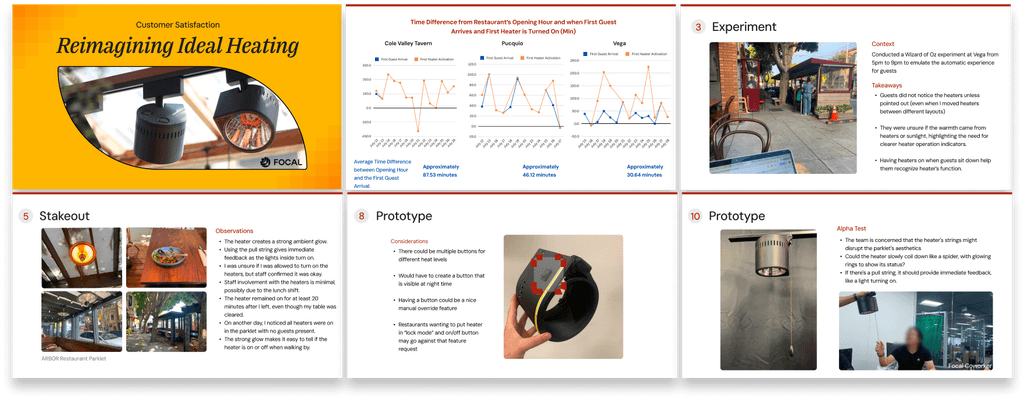
Some Snapshots from Final Customer Satisfaction Report.
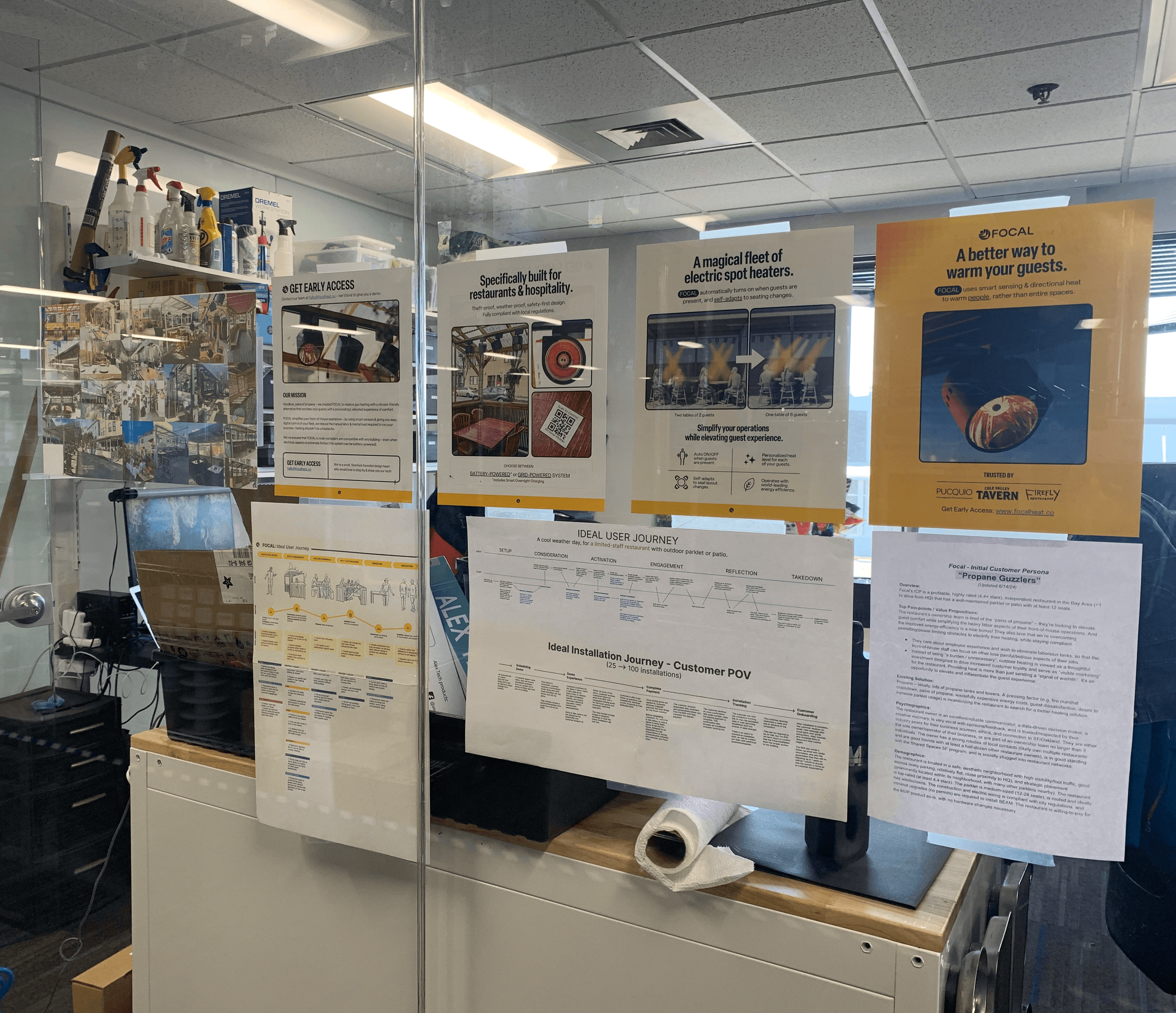
Hung up user journeys in the office to share discoveries with the engineering team.
Results
Synthesis & Team Share out
Compiled my work into a report presented to the CEO and CFO. I used my research to scope out four projects aimed at improving UX.
Context
Worked at an Infrared Heater Startup
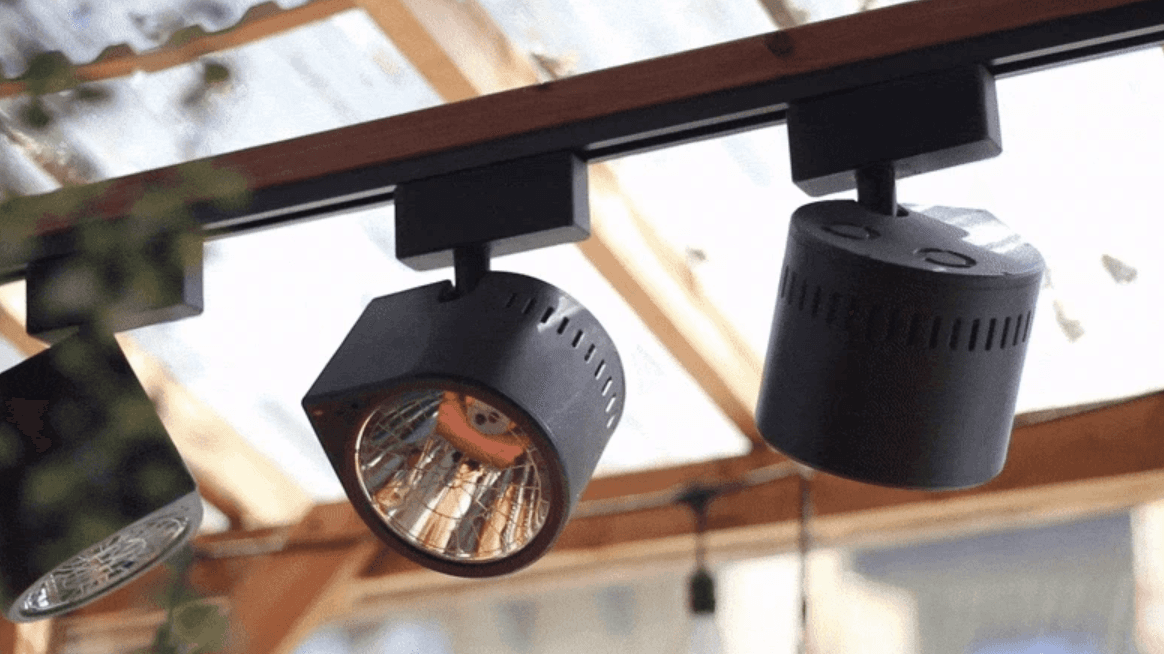
Focal is a start-up whose mission is to revolutionize how people are heated. When I joined, they had finished installing five pilot installations.
Discovery
Understanding the Ideal Heating Experiences
Field Work
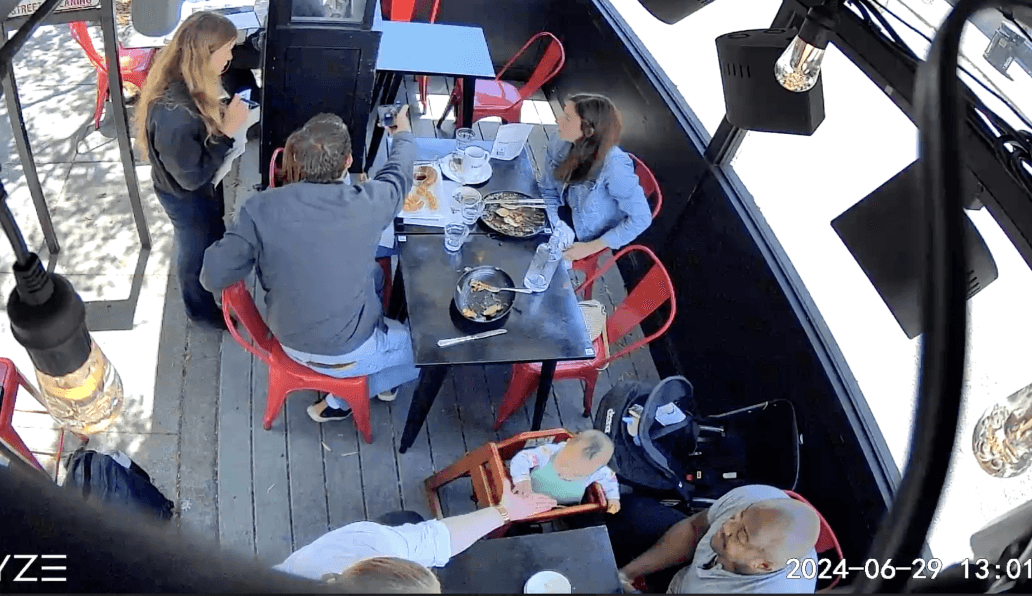
Spoke with 20 guests dinning outdoors in Hayes Valley. Ran activities with 28 guests at Cole Valley Tavern. Interviewed 8 staff (CVT, Vega, CPB).
Observations
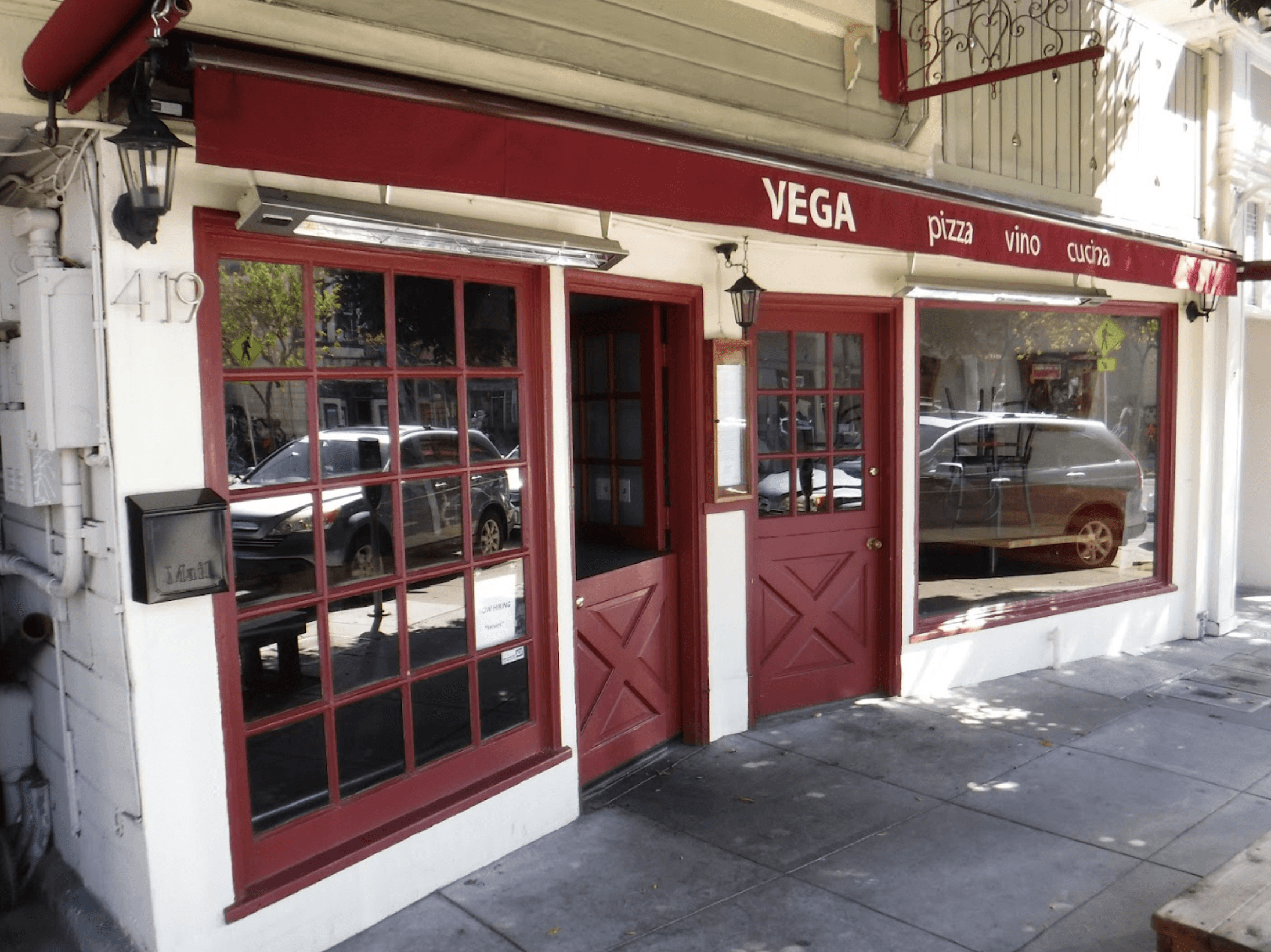
Conducted stakeouts at Stakeouts five restaurants. Identified important moments from parklet cameras.
Interviews
Notes from Manager’s YES/NO decisions from ~20 restaurant, when pitched pricing
How Might We...
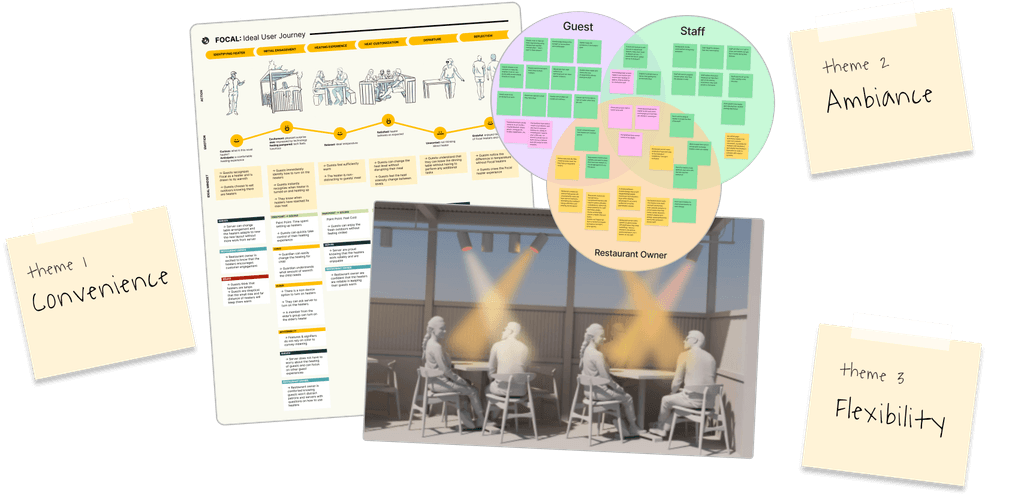
Create a heating system for restaurant parklets that feels more convenient, flexible, and ambient for guests and staff.
Themes and Insights
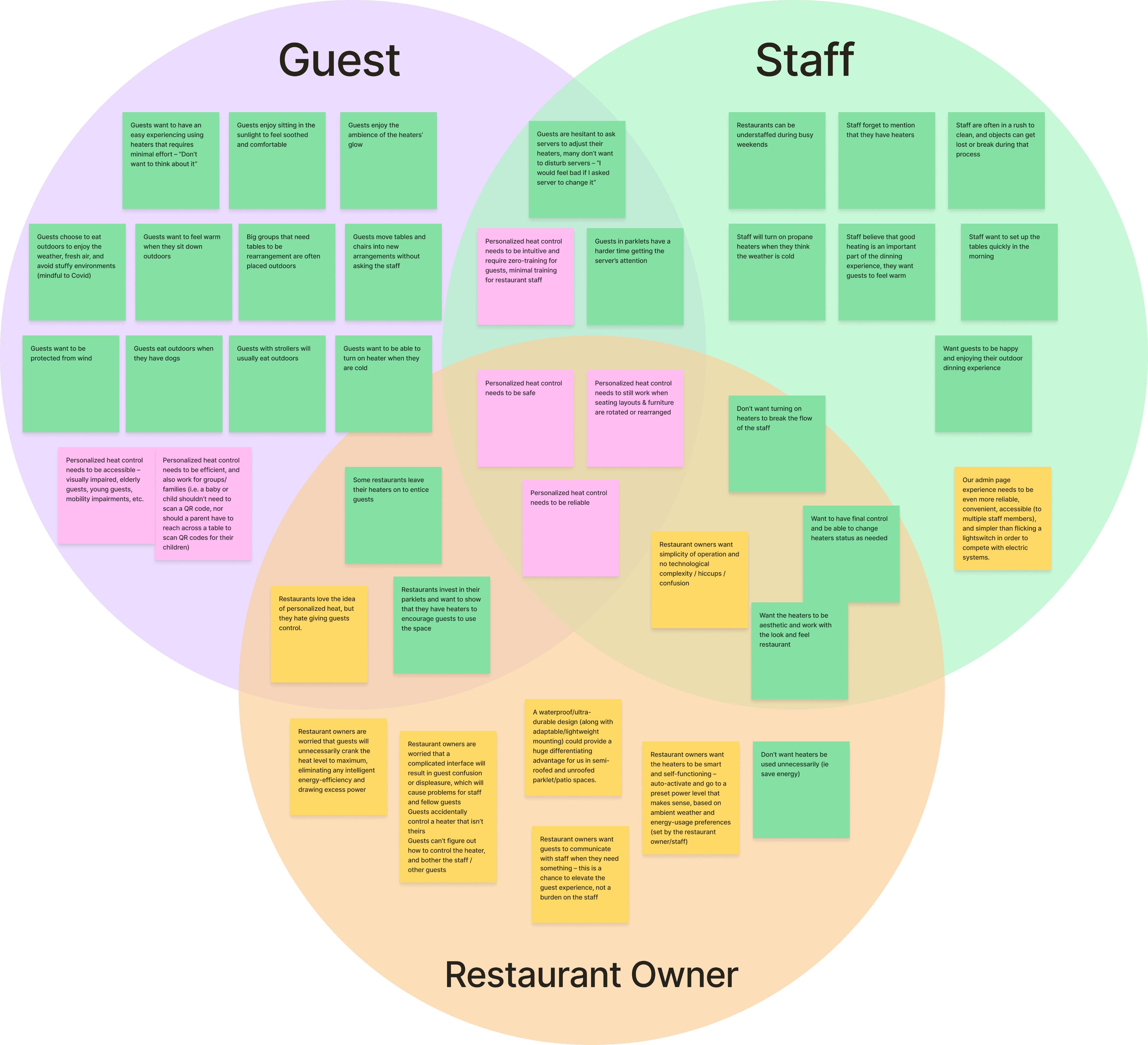
Convenience
Guests feel guilty if they inconvenience the staff; find it challenging to get the staff's attention when seated in the parklet.
Using our heaters should be more reliable, convenient, accessible and simpler than flicking a light switch in order to compete with electric systems.
Restaurants struggle to maintain outdoor table objects as they frequently get lost or broken during the clean-up process.
Ambiance
Restaurants want to maintain their aesthetics and foster a human-centered experience.
Restaurants aim to attract guests to their parklet by promoting their heaters.
Guests enjoy the ambient glow that heaters create
Flexibility
Guests dine outdoors due to situations that are difficult to accommodate indoors, such as having large groups, strollers, or dogs.
Guests rearrange tables and chairs to suit their needs.
Parklets feature various table and chair arrangements.
Case Studies
Cole Valley Tavern
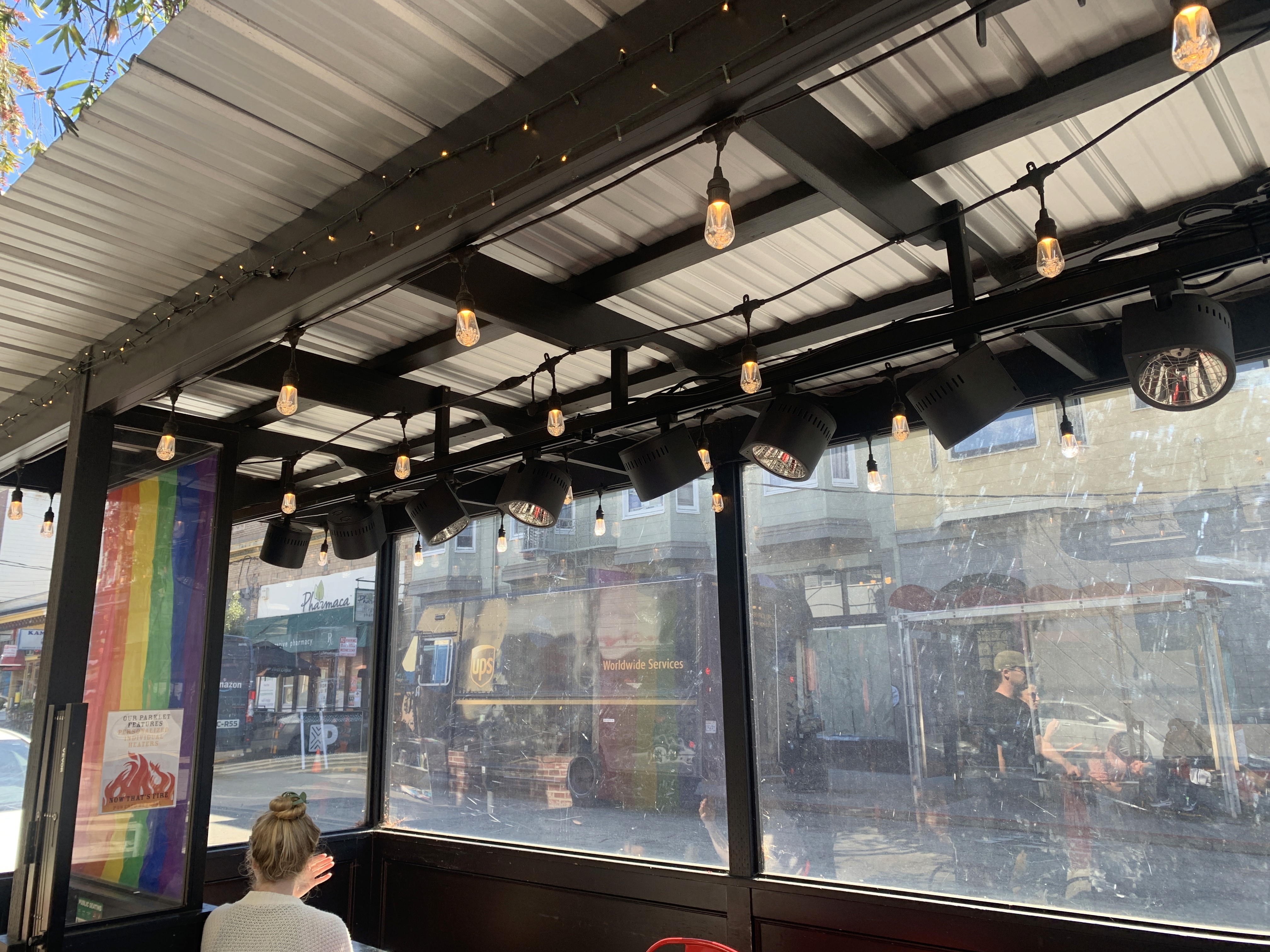
Archetype:
Under-staffed restaurant with a casual atmosphere.
Goal:
To encourage more guests to eat outdoors when it’s cold outside.
Needs:
A way for guests to stay warm without disrupting staffs’ workflow.
Guest Personas
George and Sam enjoy grabbing lunch and co-working at Cole Valley’s Tavern. They are tech-savvy individuals who struggle to get the staff's attention when seated in the parklet. George and Sam enjoy trying new experiences and would prefer to control their own heater.
Niko met up with her three friends at Cole Valley Tavern to catch up. She often eats outdoors because of her dogs. Niko gets cold more easily than her friends; she prefers having a heater on while her friends don’t.
Vega
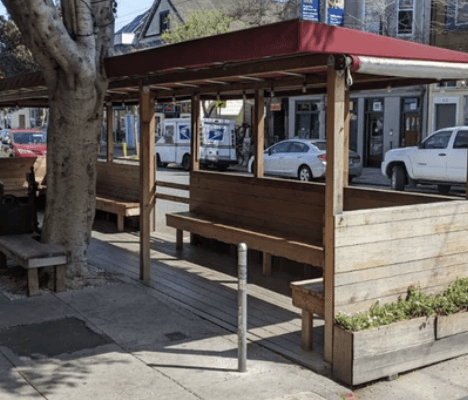
Archetype:
A high-end, well-staffed restaurant where staff regularly check in with guests and inquire if they would like heat. Exceptional customer service is a top priority.
Goal:
To provide an exceptionally pleasant heating experience for guests.
Needs:
A convenient system to ensure guests feel warm in the parklet with minimal labor and cost to the staff.
Guest Personas
Jude and Sergio are a senior couple who frequently dine at Vega. They enjoy the parklet for its fresh air and feel comfortable asking the staff if they have any concerns. They prefer low-tech environments that provide a relaxed and uncomplicated dining experience.
Danielle invited her extended family of eight for a dinner reunion at Vega. Her guests include her nieces and parents. Family members turn to her with questions, and she finds the meal most enjoyable when everyone else does too. Danielle would prefer an easy way to adjust the heat for her family.
User Journeys
Plotted the Ideal Heating Experience
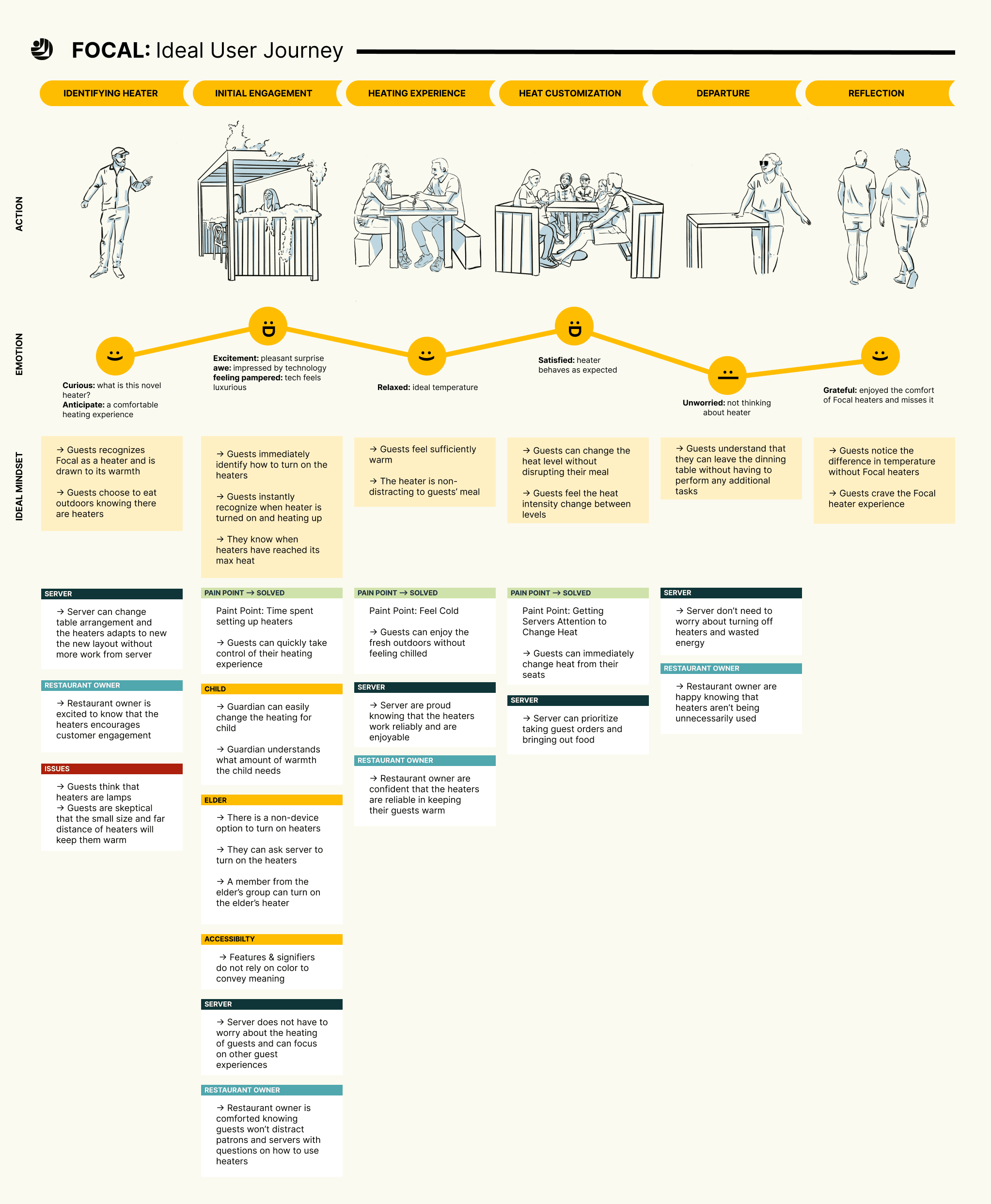
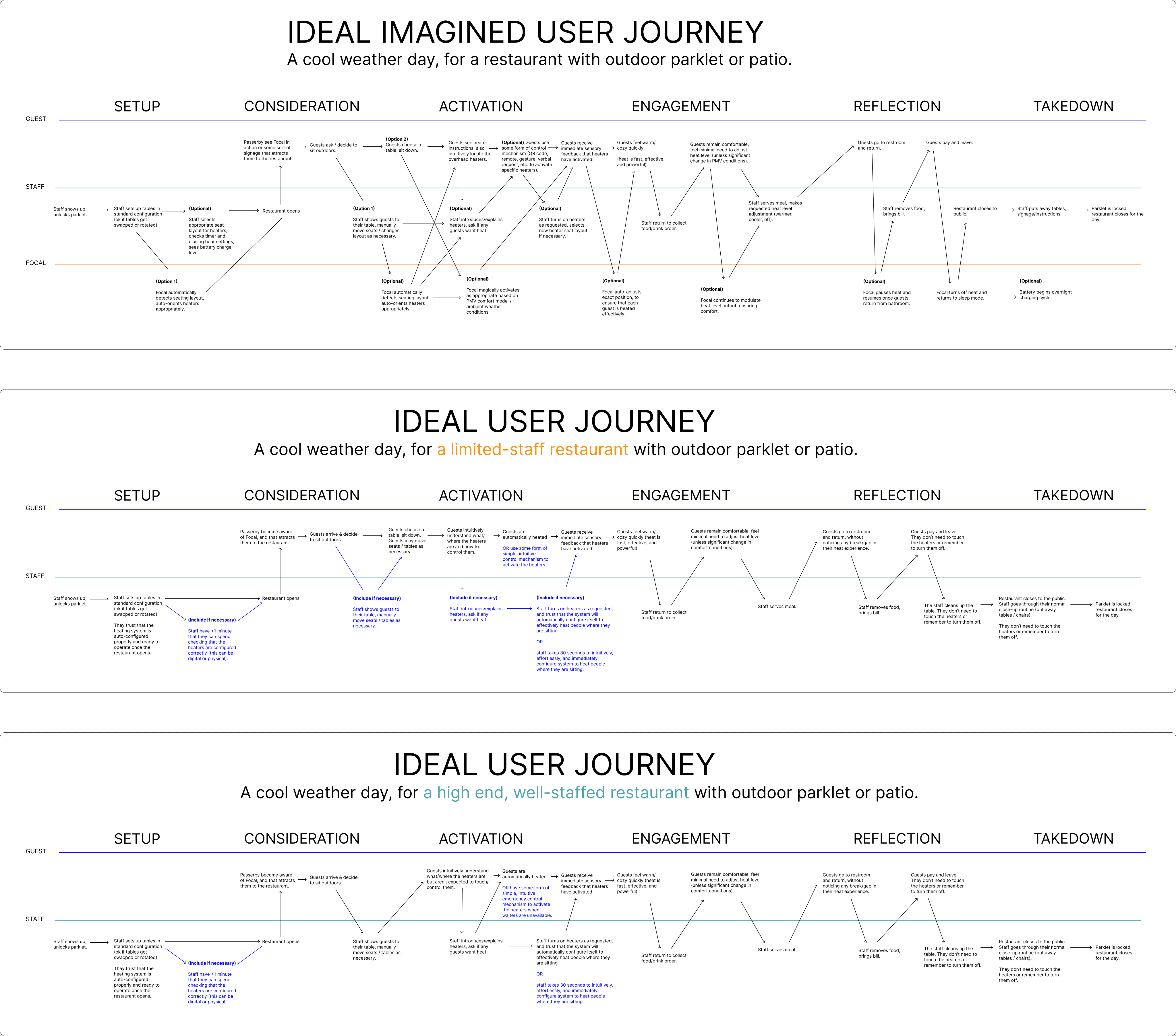
Pain Points
Forgetfulness and tediousness around turning off heaters
Confusion if heater is on, off or warming up
Equipment weathering and insufficient communication of technical issues.
Unclarity around what Focal is and how to operate it
Result
Research Informed Projects
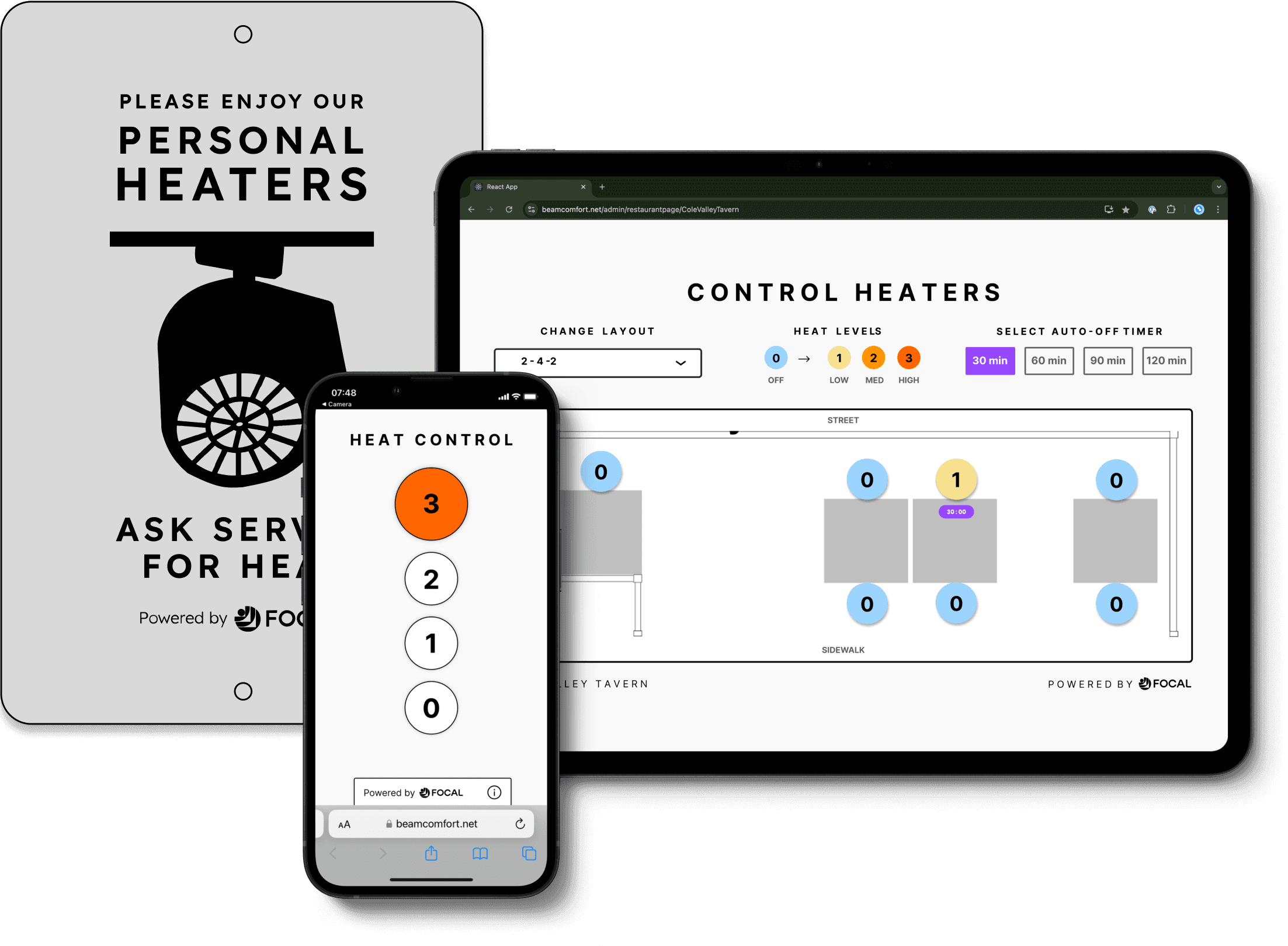
By identifying points of friction through user journey mapping and other methods, I scoped out four high-impact projects feasible within my limited timeline, all aimed at enhancing the user experience:
Updated Admin UI
Added thumbnails for table layouts
Improved mobile responsiveness
Created a new auto-off feature for heaters
Revised Guest UI
Proposed a progress bar
Designed an “Offline Heater” screen
Enhanced accessibility
Improved Guest Heat Control
Improved clarity
Updated materials for durability
Developed Guest Product Education
Explored ideas such as signage, lighting, symbols, scripts, etc.
Reflection
Building Conviction
Working on a small team with limited bandwidth, I quickly realized the importance of building strong conviction for the design propositions I presented to the engineering team. To ensure my ideas were well-founded, I conducted interviews, prototyped solutions, and ran experiments to gather concrete evidence. This approach not only strengthened my proposals but also helped streamline decision-making. I learned that unless I could clearly articulate the need for a change, it was often best to maintain consistency in the current iteration, focusing on refining existing elements rather than introducing unnecessary complexity. This experience taught me the value of being both methodical and persuasive in a fast-paced, resource-constrained environment.