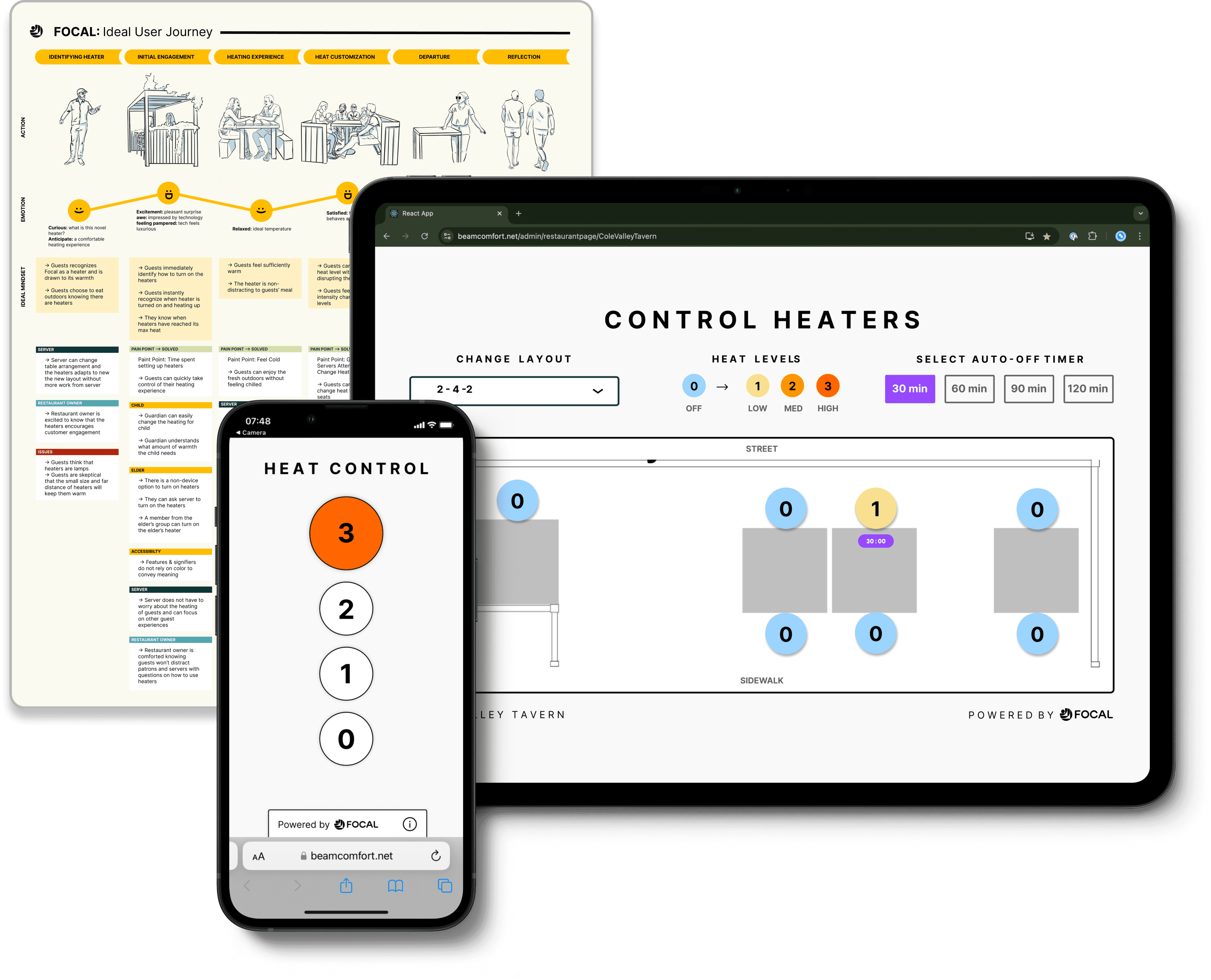
Compiled data and insights to guide a pre-seed startup in making informed product decisions before launch. Scoped out four projects to increase customer satisfaction.
ROLE
One of two designers and sol design intern
TIMELINE
8 weeks from June to August 2024
SKILLS
User Research, Interaction Design, Visual Design,
Mobile Development
TOOLS
Figma, Rhino, Procreate, Ponoko, Laser Cutting
CONTEXT
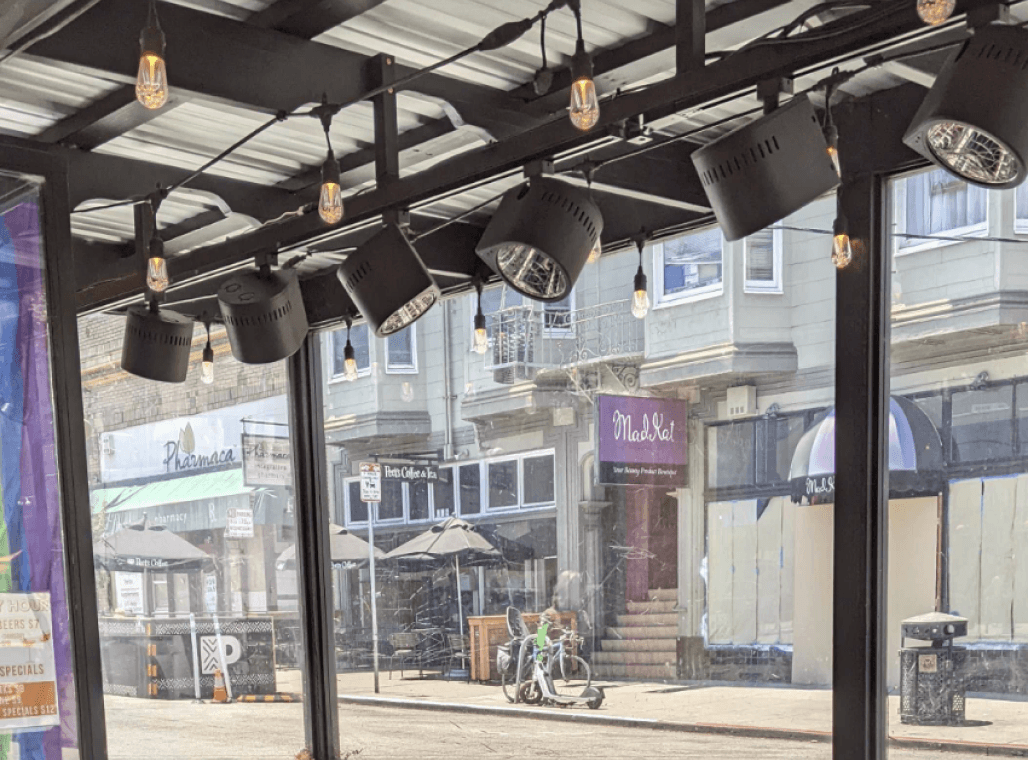
Focal is a pre-seed company whose mission is to revolutionize how people are heated. When I joined, they had finished installing five pilot installations of their heating solution. My primary goal was to validate the product idea before their official launch by the end of the summer.
SOLUTIONS
I approached my work in two parts: long-term strategic thinking and short-term actionable projects.
Long-Term Thinking
For the long-term strategy, I conducted extensive user research, compiling the findings into a comprehensive report. This report detailed various product form factors, including their insights, pros, and cons, gathered through tests and interviews. I also collaborated with my manager to conduct a market segment analysis, identifying potential target audiences beyond restaurant parklets.
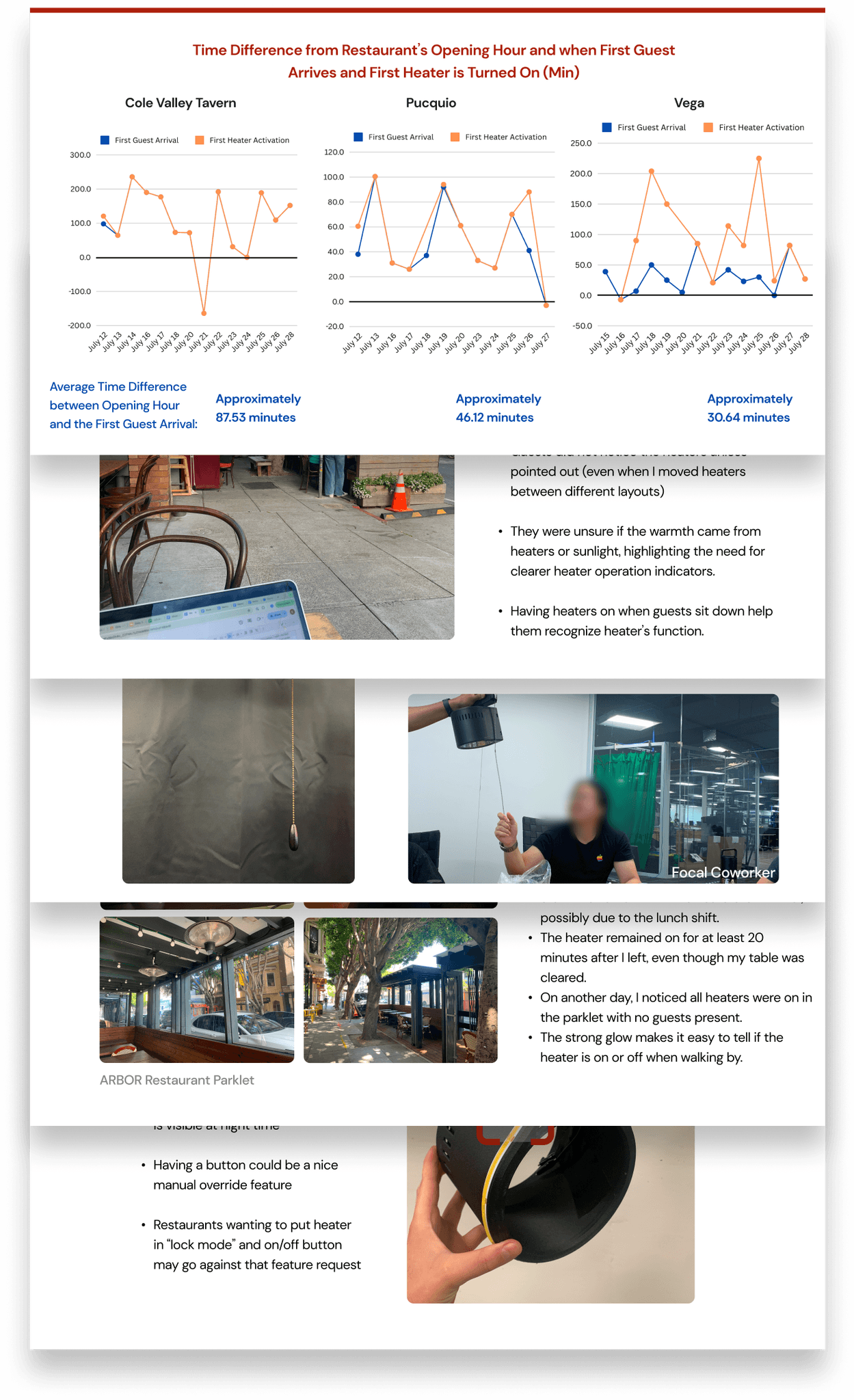
Snapshots from Final Customer Satisfaction Report
Four Short-Term Projects
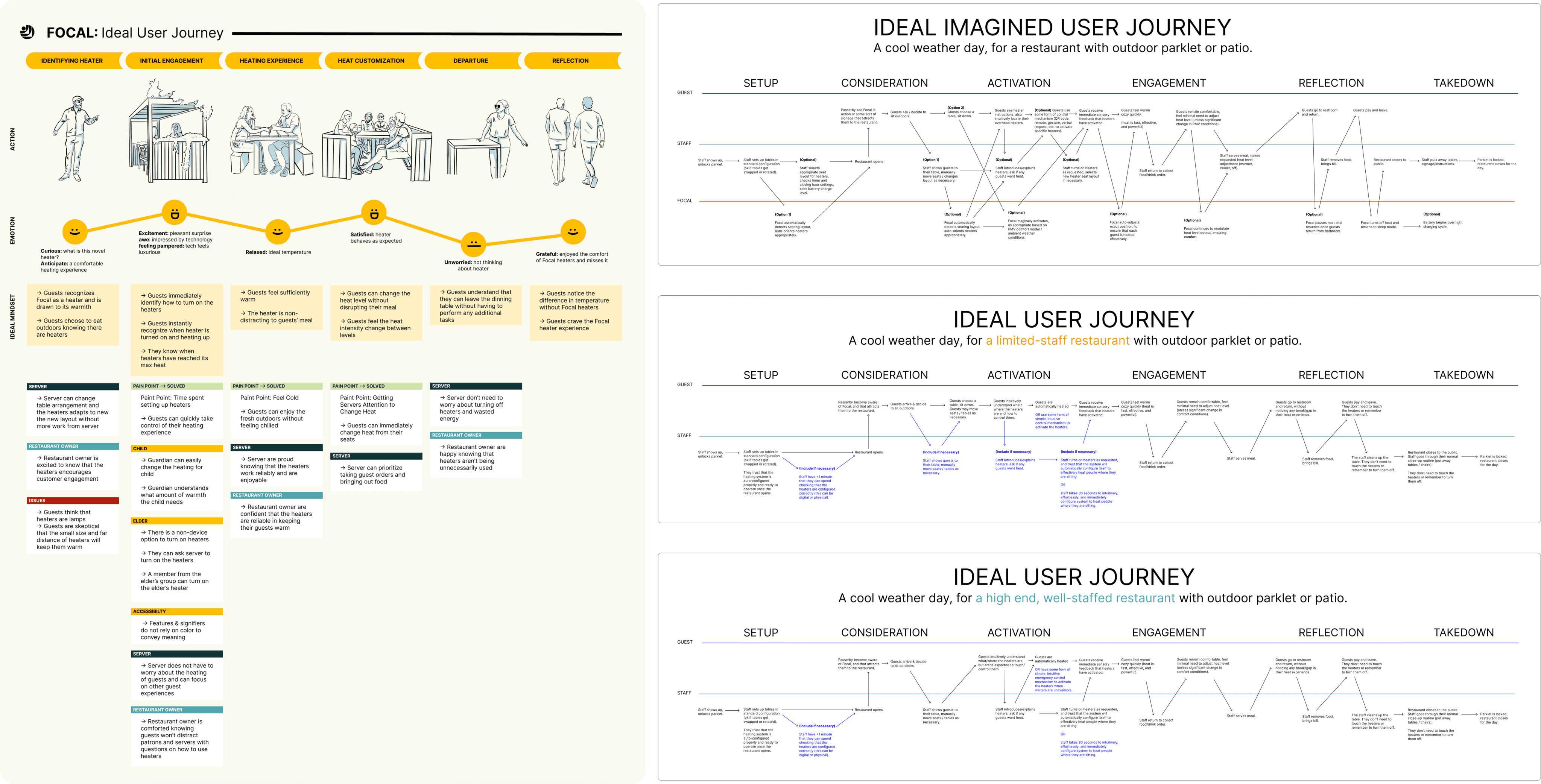
On the short-term side, I focused on identifying points of friction through user journey mapping. These insights allowed me to scope out four high-impact projects that could be implemented within my limited timeline, all aimed at improving the user experience.
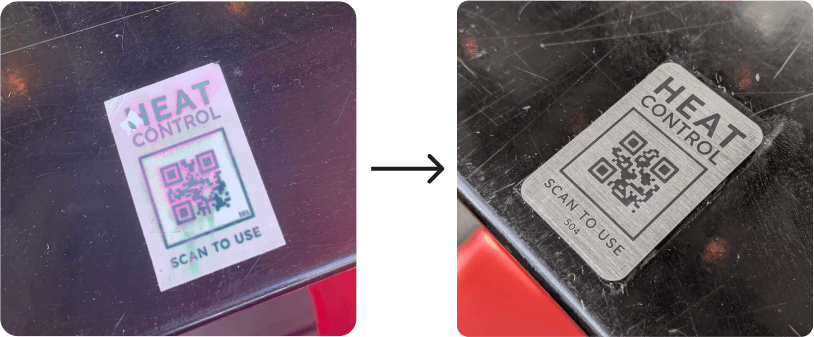
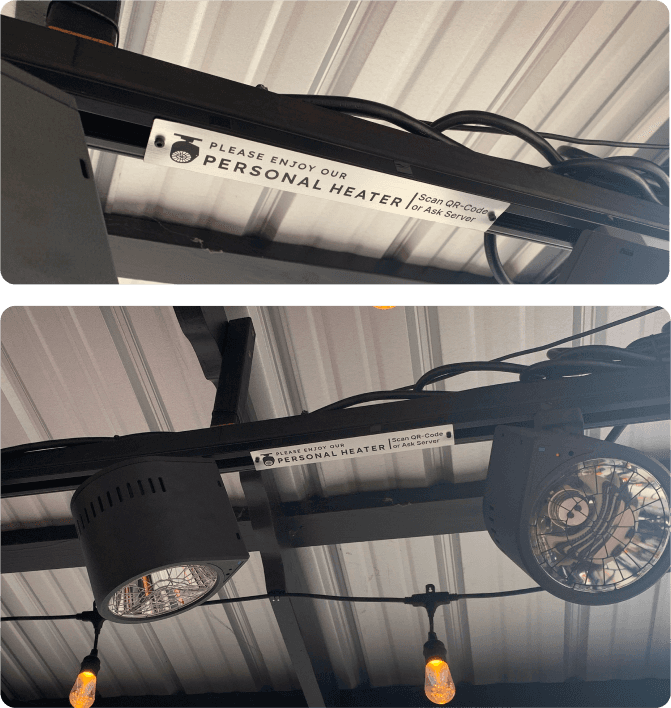
RESEARCH
Main Curiosities
What is the ideal user journey for guests and staff when it comes to heating?
What is current guest and staff’s experience using Focal? What can be improved?
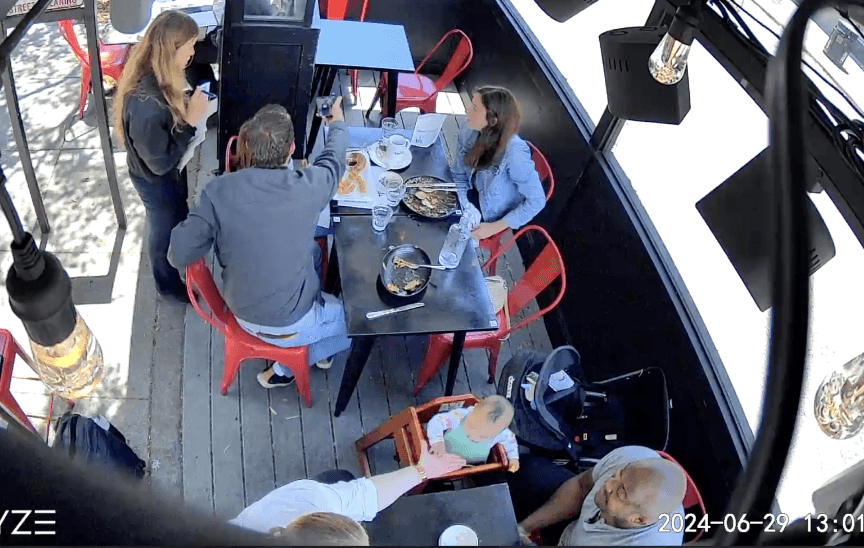
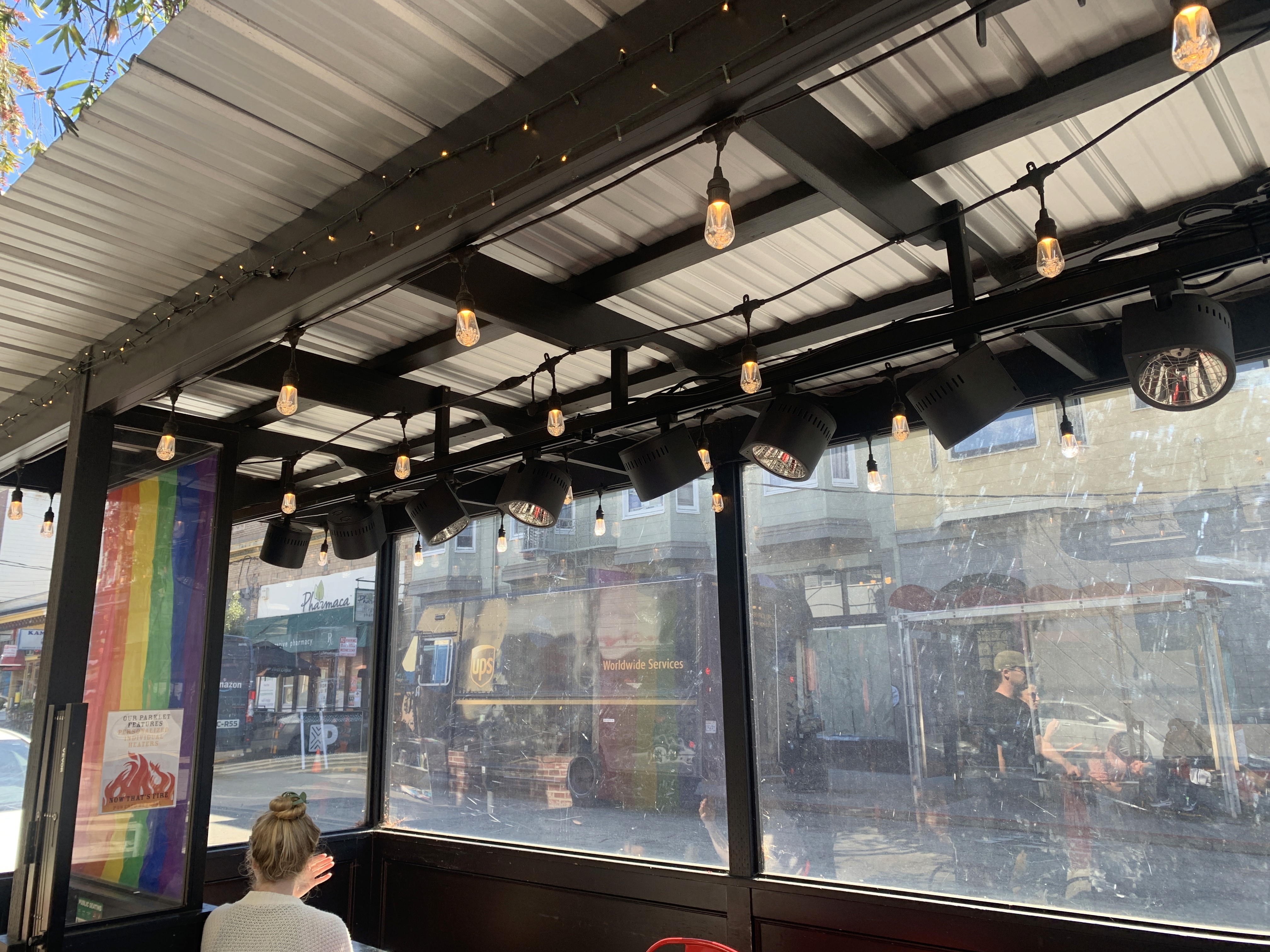
Field Work
• 20 guests dinning outdoors in Hayes Valley
• 28 guests at Cole Valley Tavern
• 8 staff (CVT, Vega, CPB)
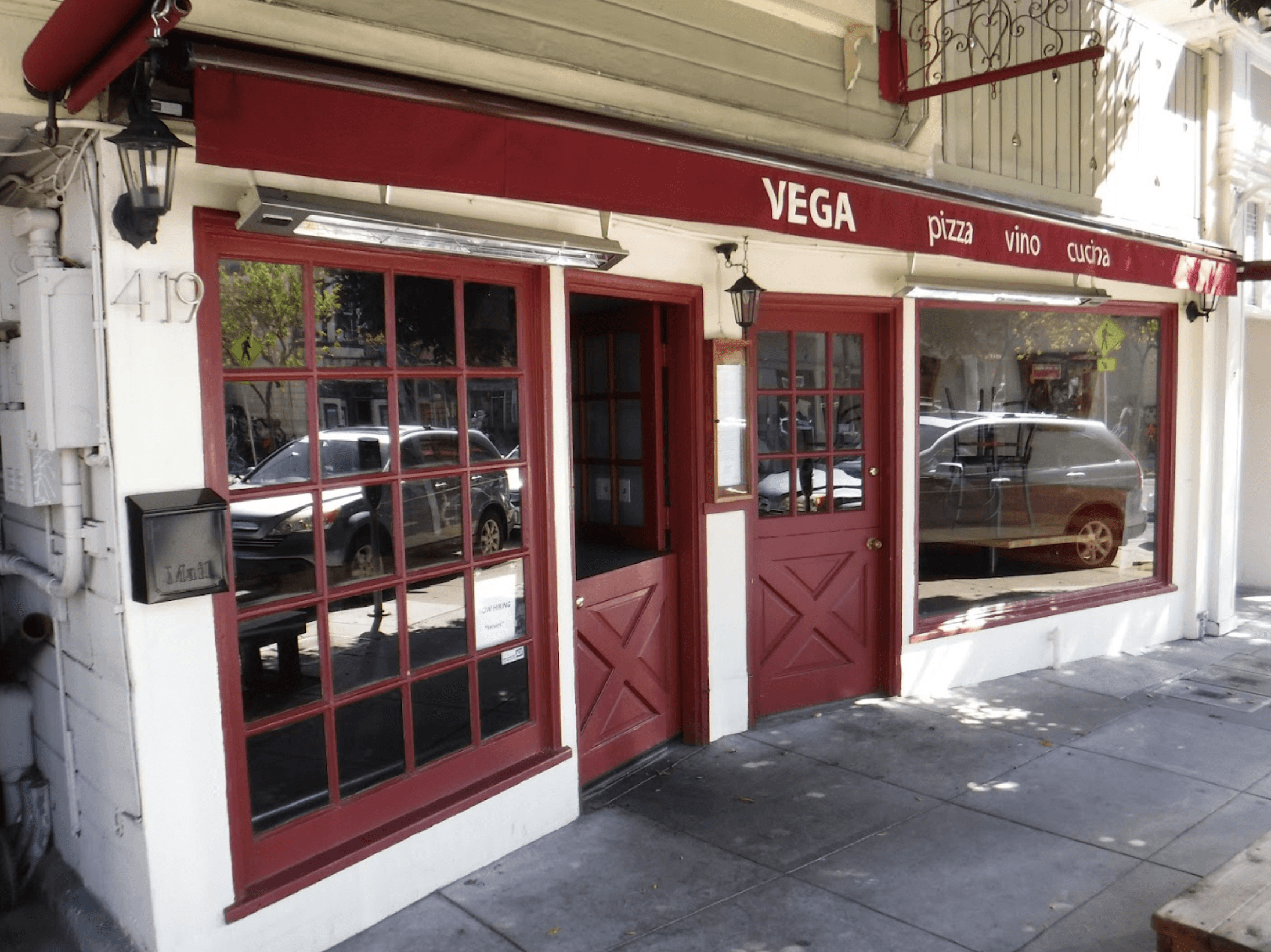
Observations
• WYZE footage
Stakeouts
• Cole Valley Tavern
• Vega
• El Mano, Pearl, Chez Maman
Interviews
Akshay pitched pricing & forced YES/NO decisions from ~20 restaurant
Create a heating system for restaurant parklets that feels more convenient, flexible, and ambient for guests and staff.
How Might We
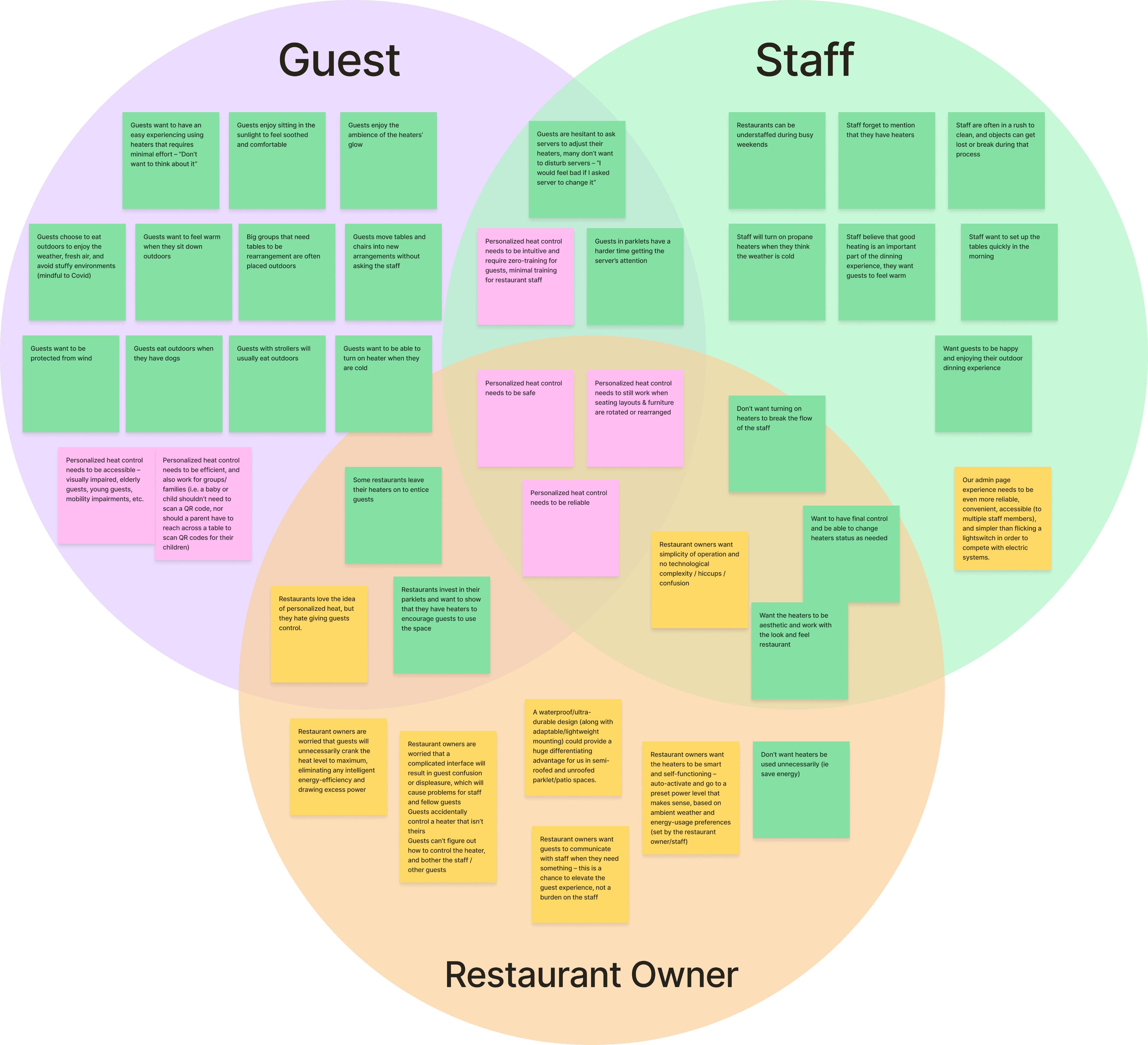
Themes & Insights
Case Study
User Journeys
Identified Pain Points
Forgetfulness and tediousness around turning off heaters
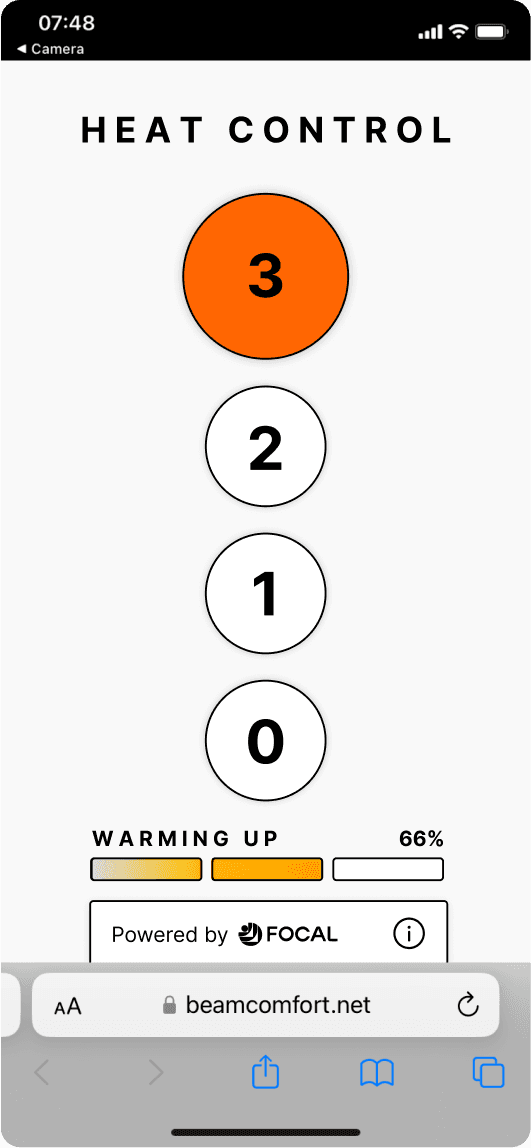
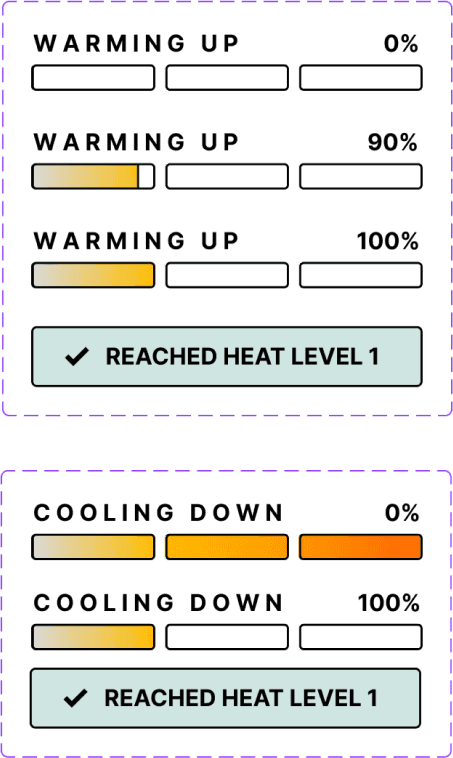
Confusion if heaters are on/off or warming up
Weathing and unclear heat activation system
Unclarity around what Focal is and how to operate it
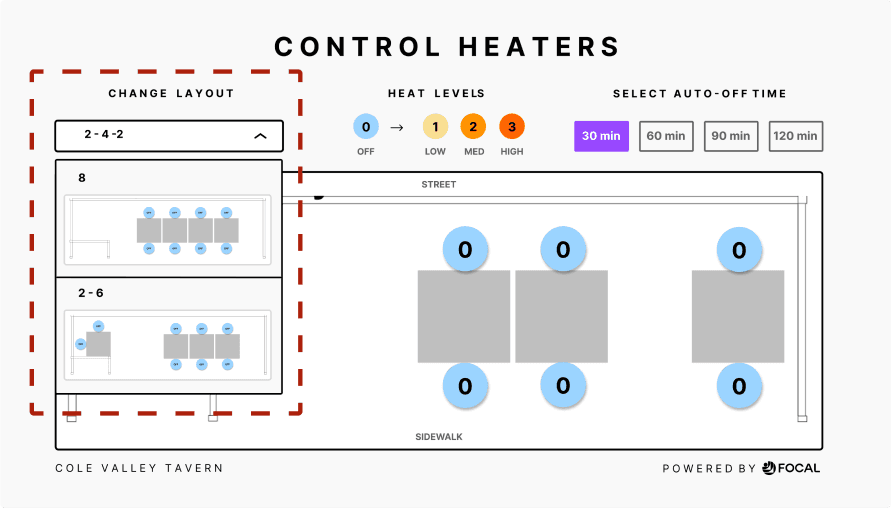
CASE STUDY: Redesigned Admin UI
Problem
Currently remote monitors are turning off heaters at the end of the day. However, this is not a sustainable system. Restaurants need a way to easily turn of heaters if they do not pay for the future “smart software.”
Stories
Solution
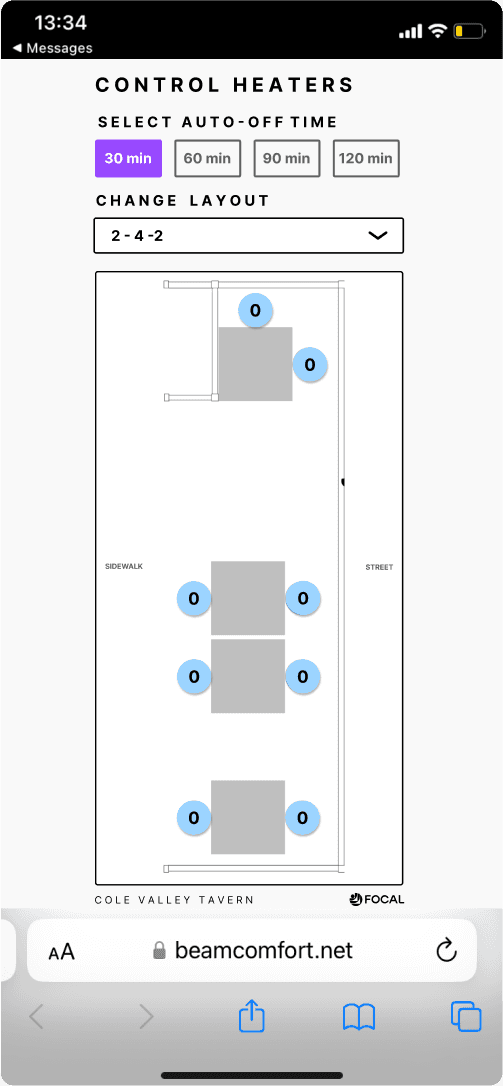
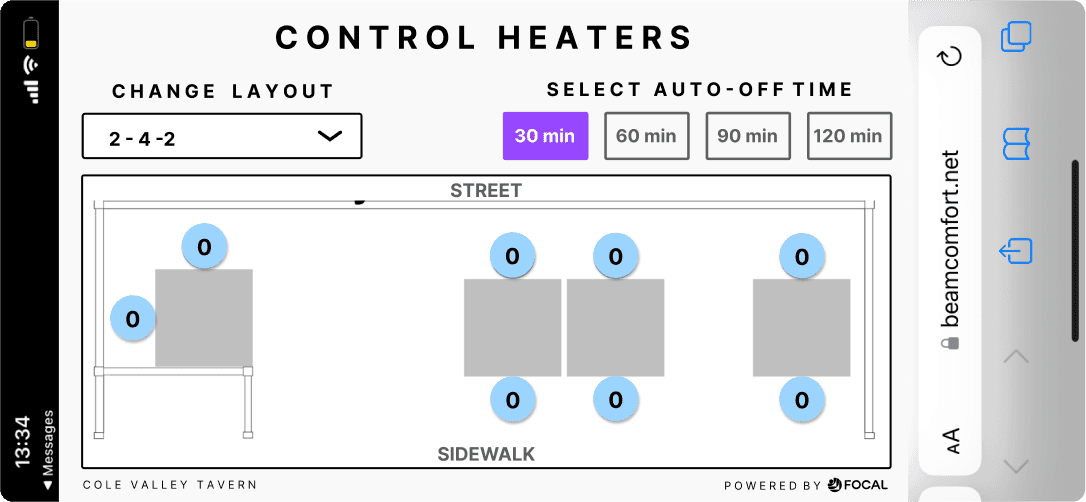
An auto-off timer with four pre-set options. When a heater is activated it starts a countdown. The countdown can be resent or manually overdid by cycling though heat levels.
Exploration

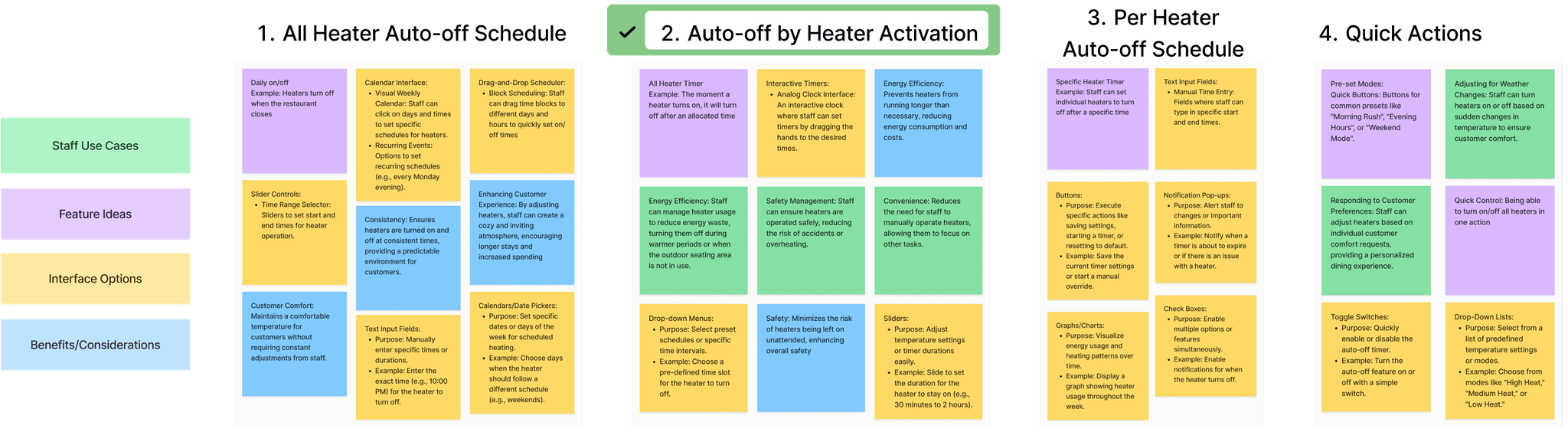
Idea Generation
Considerations
Presented ideas to my co-designer to discuss the pros & cons of each idea in terms of the current product stage and future vision.
We concluded that option 2 is the closest to an MVP for the “smart” auto-off software the company is considering. Therefore, the feature is useful in collecting customer desirability and edge cases for auto-off based on guest presence (e.g., heater activation).
The feature also aligns with the new pricing model the company is developing: a one-time purchase for heaters and control pages, with an optional subscription for smart software. In this respect, the auto-off timer provides a working version of a more energy-efficient auto-off, while still leaving room for why restaurants would be interested in the smart software.
Research
Interviews

Staff have a general sense of how long guests dine for, indicating trends in time guests spend at restaurants
Staff are often busy and want minimal cognitive load when setting up an auto-off timer
Staff prefer quick actions over high customization
Designs
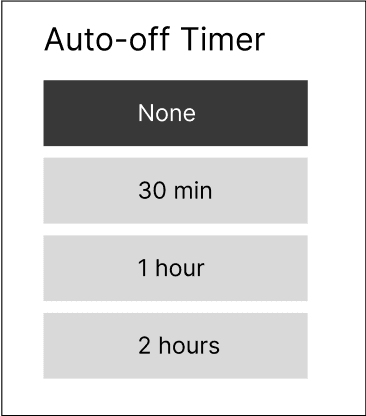
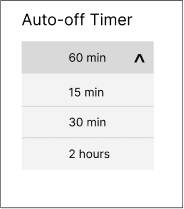
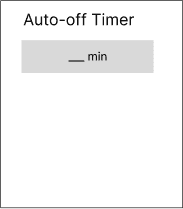
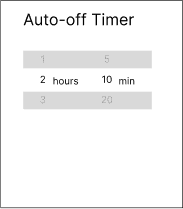
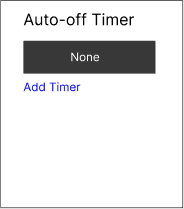
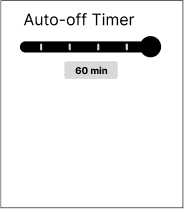
List Of Options
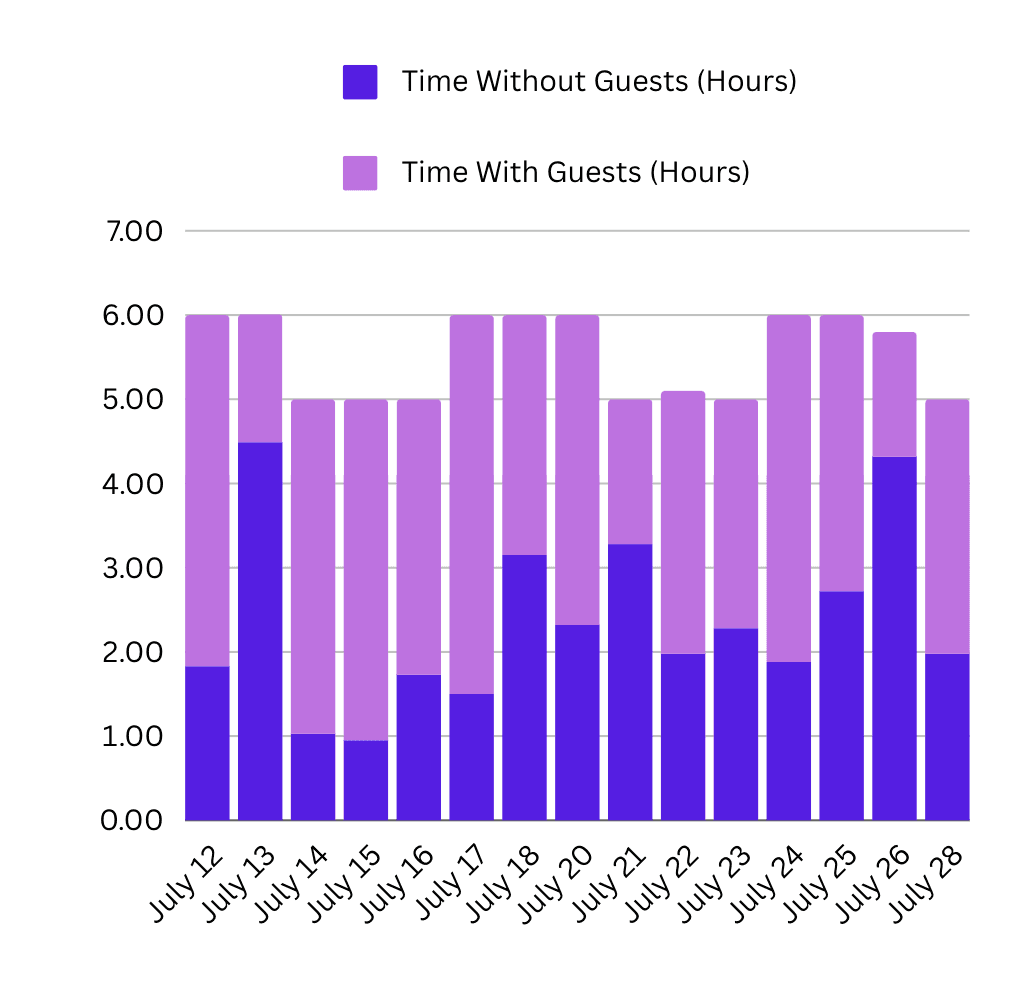
Time with and without at least one guest at restaurant’s parklet based on their open hours*
*if a guest’s dinning session extends beyond the closing hours, the time is still included
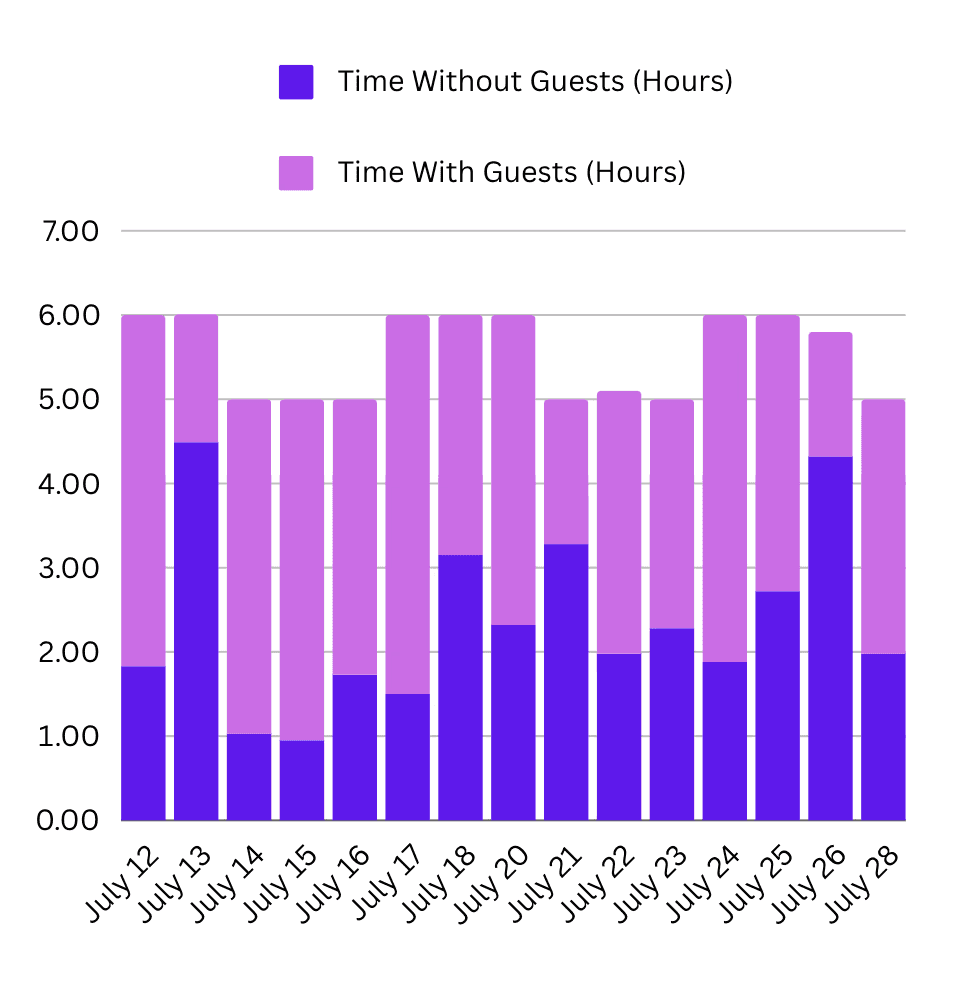
Cole Valley Tavern
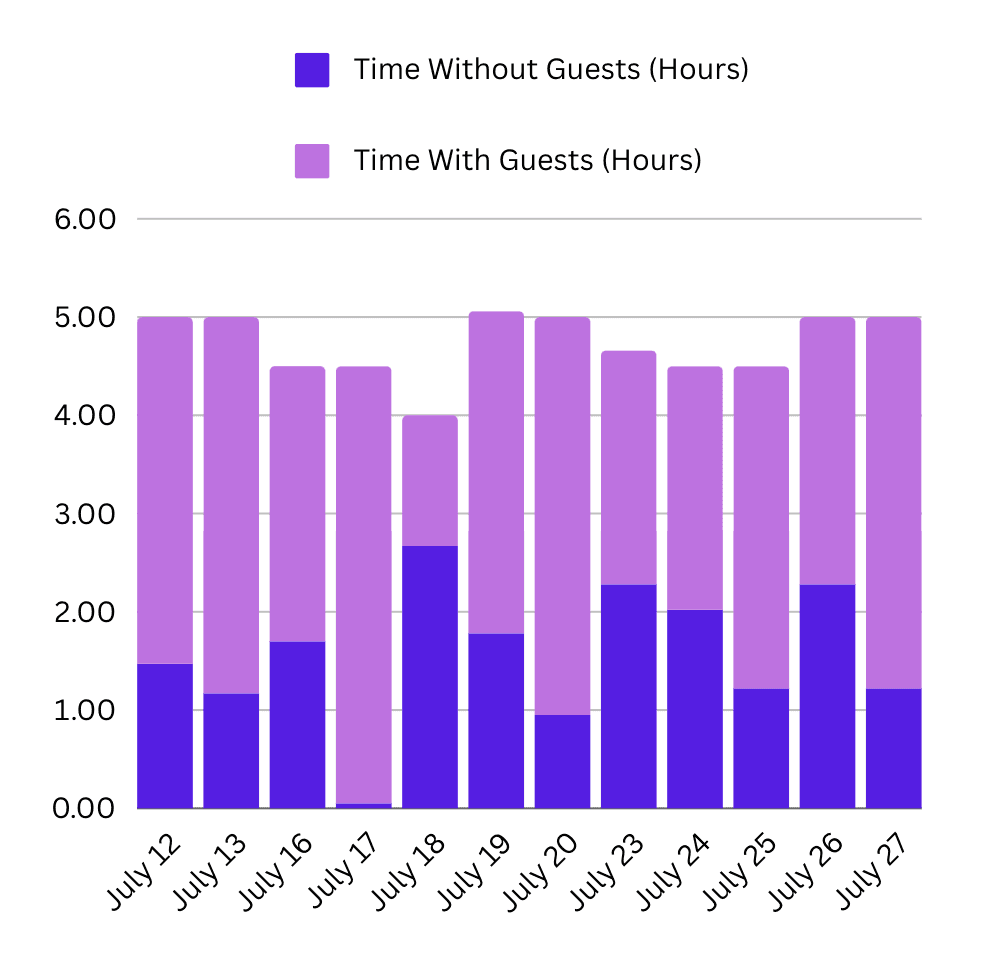
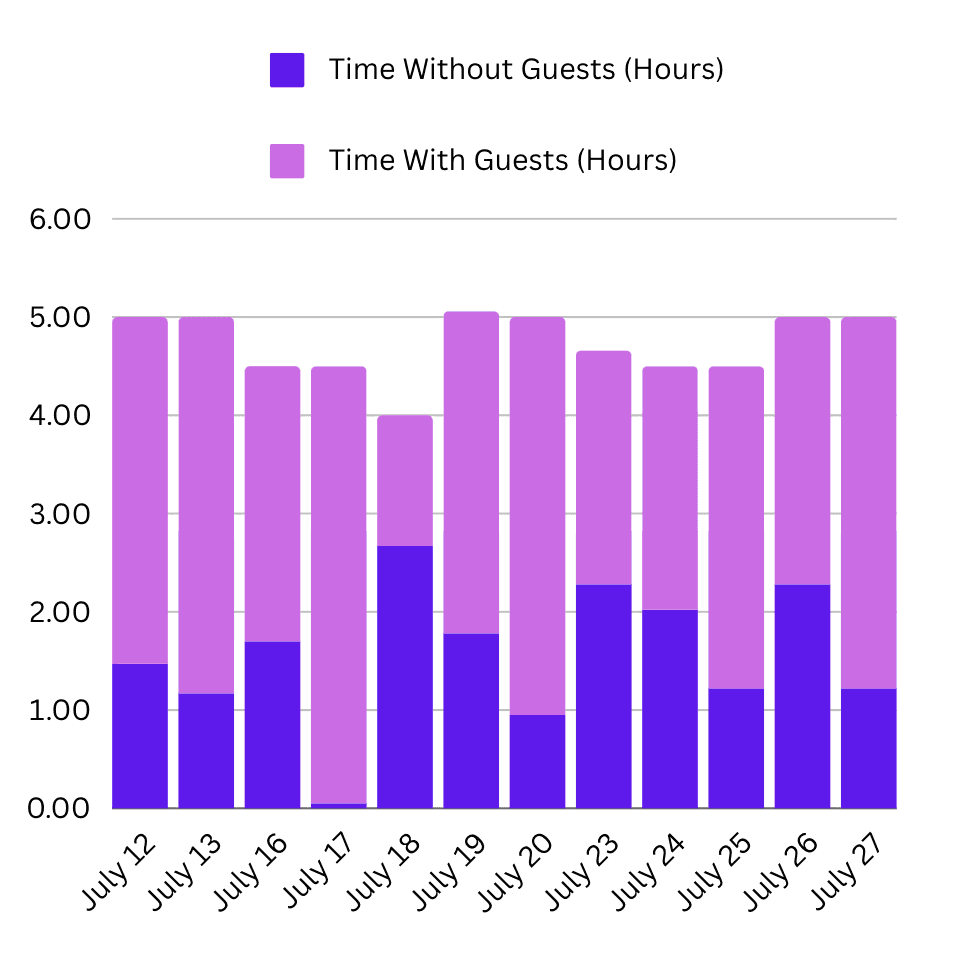
Pucquio
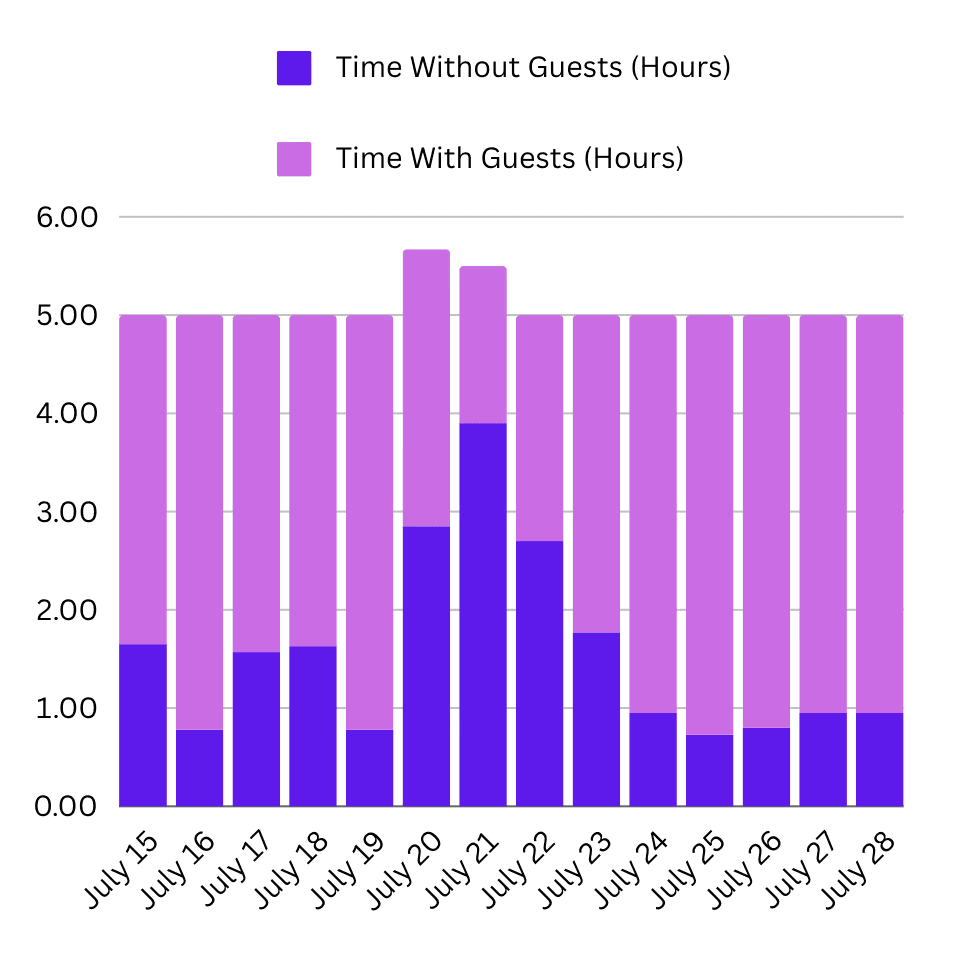
Vega
Cole Valley Tavern
Average Time Without Guests:
2.63 hours/day
Average Time With Guests:
3.16 hours/day
Pucquio
Average Time Without Guests:
1.57 hours/day
Average Time With Guests:
3.33 hours/day
Vega
Average Time Without Guests:
1.57 hours/day
Average Time With Guests:
3.51 hours/day
If heaters run continuously and are not adjusted for periods without guests, there would be substantial energy wasted up to approximately 65% of the time.
By requiring an auto-off time, we can ensure that energy is being minimally wasted while requiring little to no staff oversight.
Insight
Auto-off Timer
None
30 min
1 hour
2 hours
Auto-off Timer
30min
1 hour
2 hours
4 hours
Before
After
Consideration
To optimize decision-making and user satisfaction, I included 4 customization options, guided by Hick’s Law. Research shows that 3 to 7 options strike the right balance between speed and more satisfactory decisions.
Top Five Most Frequent Session Lengths (min):
61-70
51-60
31-40
41-50
81-90
Session lengths at CVT Parklet between July 12 to July 28 sorted into buckets of ranges (minutes)
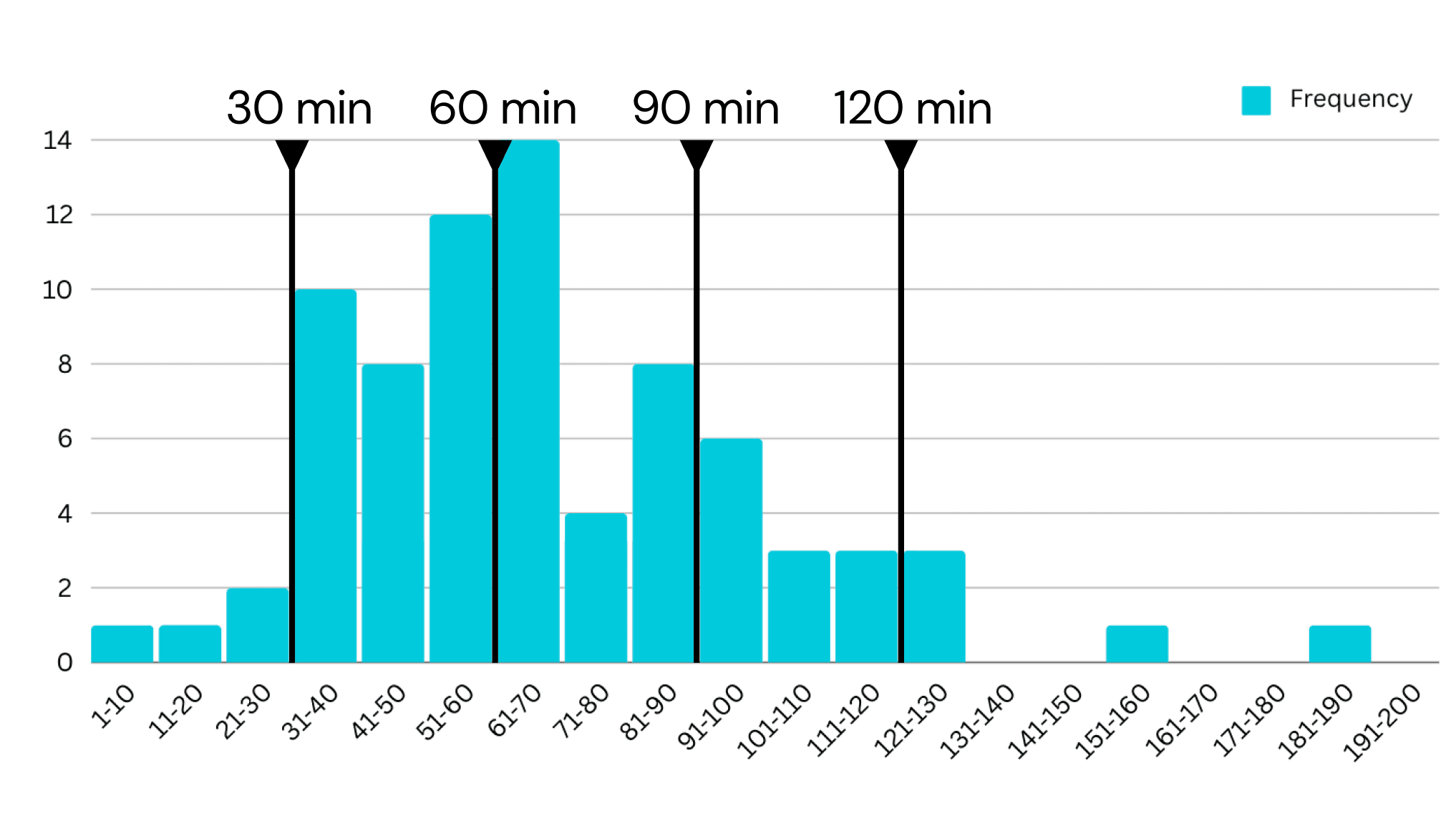
The 4 customization options are 30, 60, 90, and 120 minutes because they best capture common dining times while maximizing energy efficiency.
Usability Testing
Option 1
30 min
90 min
120 min
60 min
Option 2
30 min
60 min
90 min
120 min
Option 3
30 min
60 min
90 min
120 min
Option 4
30 min
60 min
90 min
120 min
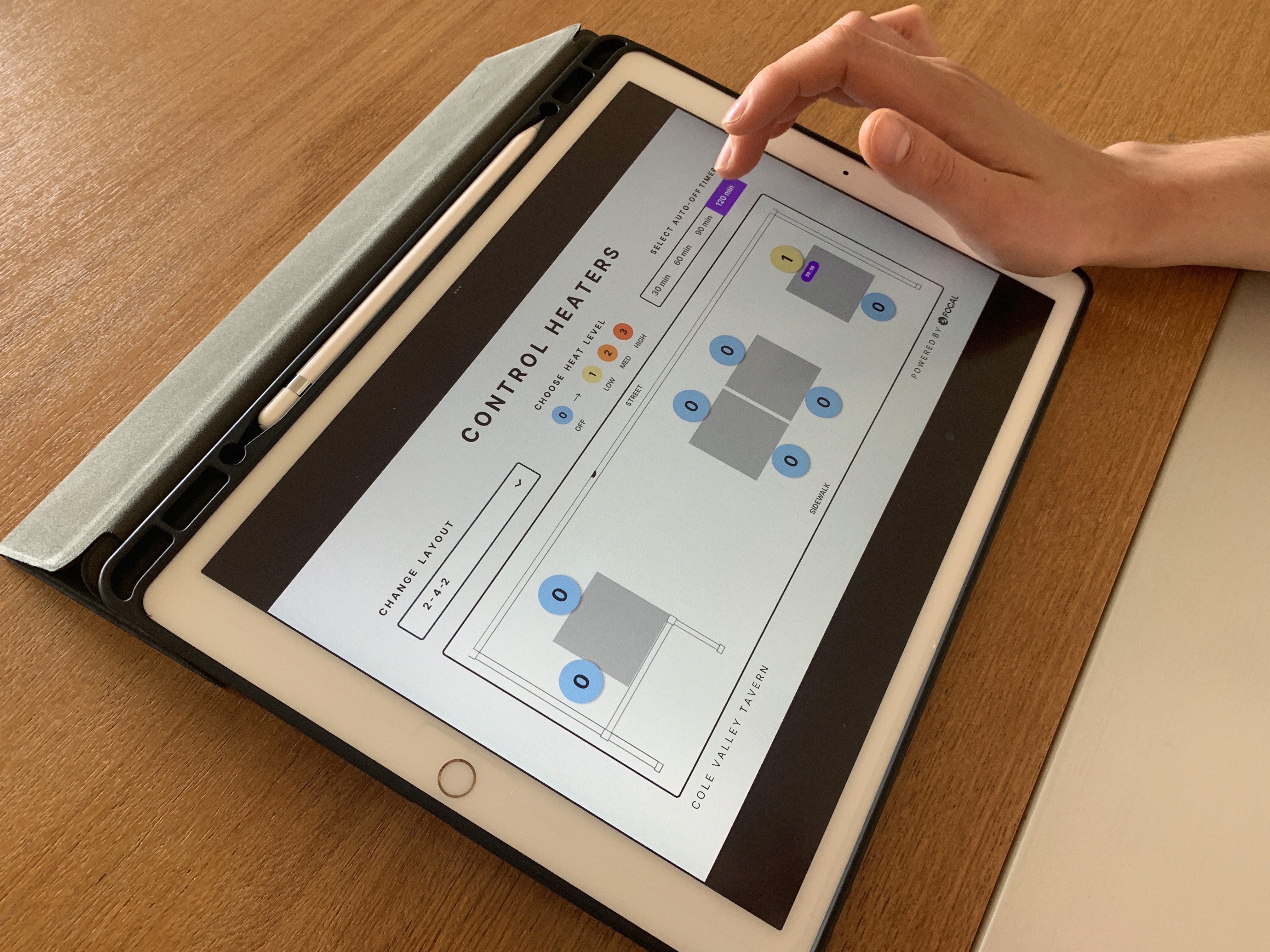
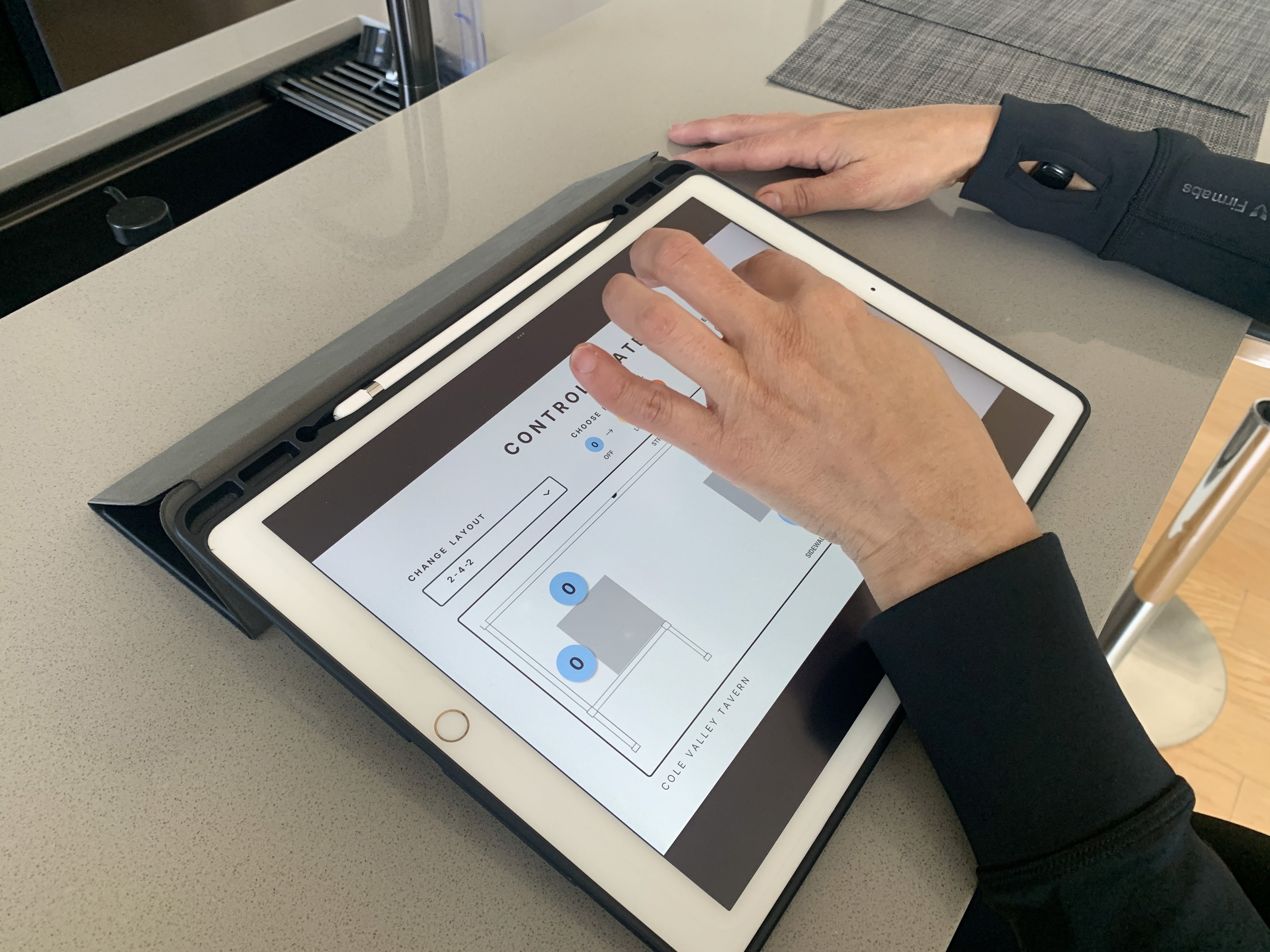
Conducted Four User Tests
Observations
In option 2, two out of four testers tried to tap and slide the purple button
One tester noted that the animation made them feel impatient.
Three out of four testers cited option 1 as the most intuitive design.
Three out of four testers made multiple attempts at tapping button in option 1 before being successful.
One tester cited that the checkmarks on option 4 led them to believe they could select multiple “time” options.
6. Interacting with option 3 was both fast and clear for all four testers.
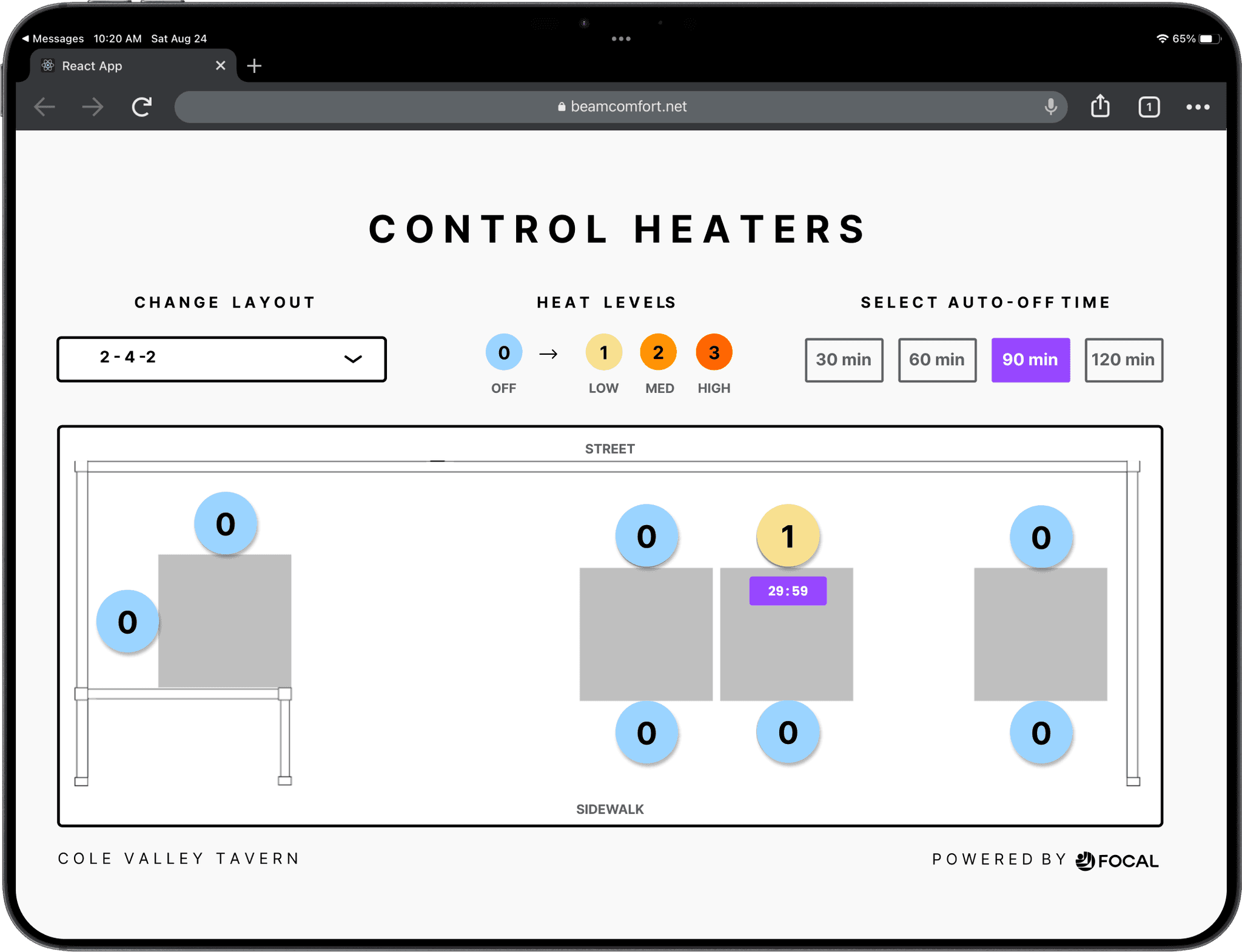
Heaters’ Countdown
When the countdown reaches zero, the heater turns off
Cycling through the heat levels resets the timer
Future Considerations
Control countdown per table instead of per heater
Easily add time to heaters’ auto-off timer
Would need to build better conviction and test different designs to optimize simplicity of feature
1
3
59
:
59
REFLECTIONS
Building Conviction
Working on a small team with limited bandwidth, I quickly realized the importance of building strong conviction for the design propositions I presented to the engineering team. To ensure my ideas were well-founded, I conducted interviews, prototyped solutions, and ran experiments to gather concrete evidence. This approach not only strengthened my proposals but also helped streamline decision-making. I learned that unless I could clearly articulate the need for a change, it was often best to maintain consistency in the current iteration, focusing on refining existing elements rather than introducing unnecessary complexity. This experience taught me the value of being both methodical and persuasive in a fast-paced, resource-constrained environment.
Embrace Horizontal and Foster Depth
During my internship, I faced the challenge of navigating multiple potential paths, from addressing current customer needs to imagining the future vision of the product. To manage this effectively, I learned to organize my work week by week, making strategic decisions on when to explore new topics versus delving deeper into existing ones. Maintaining a clear view of the big picture was crucial. For instance, I prioritized the auto-off timer because of its potential to provide valuable data for the smart software the company is envisioning. Conversely, while I addressed low-hanging fruit in the guest UI, I spent less time reimagining the interface, as the focus was shifting away from guest-based activation. This experience also taught me to ask critical questions like whether we were targeting the right market segment, if the heaters were providing sufficient warmth, and what the company's hero feature should be. Balancing these considerations helped me contribute effectively to both immediate goals and long-term strategies.
Owning the Trust and Responsibility
During my internship, I learned to become an independent worker, taking ownership of my tasks and responsibilities. I wasn’t afraid to pursue projects that I found meaningful, like proposing and developing the auto-off timer for the admin page. I took initiative by scoping out my own work, coordinating directly with engineers, and even handling tasks like sending materials to be laser cut.
Owning the trust placed in me also meant meticulously documenting my work for future reference. I became adept at writing down ideas, taking notes on processes and experiments, and preserving all scratch work for data manipulation to ensure accuracy and accountability. Trust also meant maintaining clear communication with the team, not waiting for directions but being proactive in my contributions.
Back To Home Page